Last updated November 23, 2026
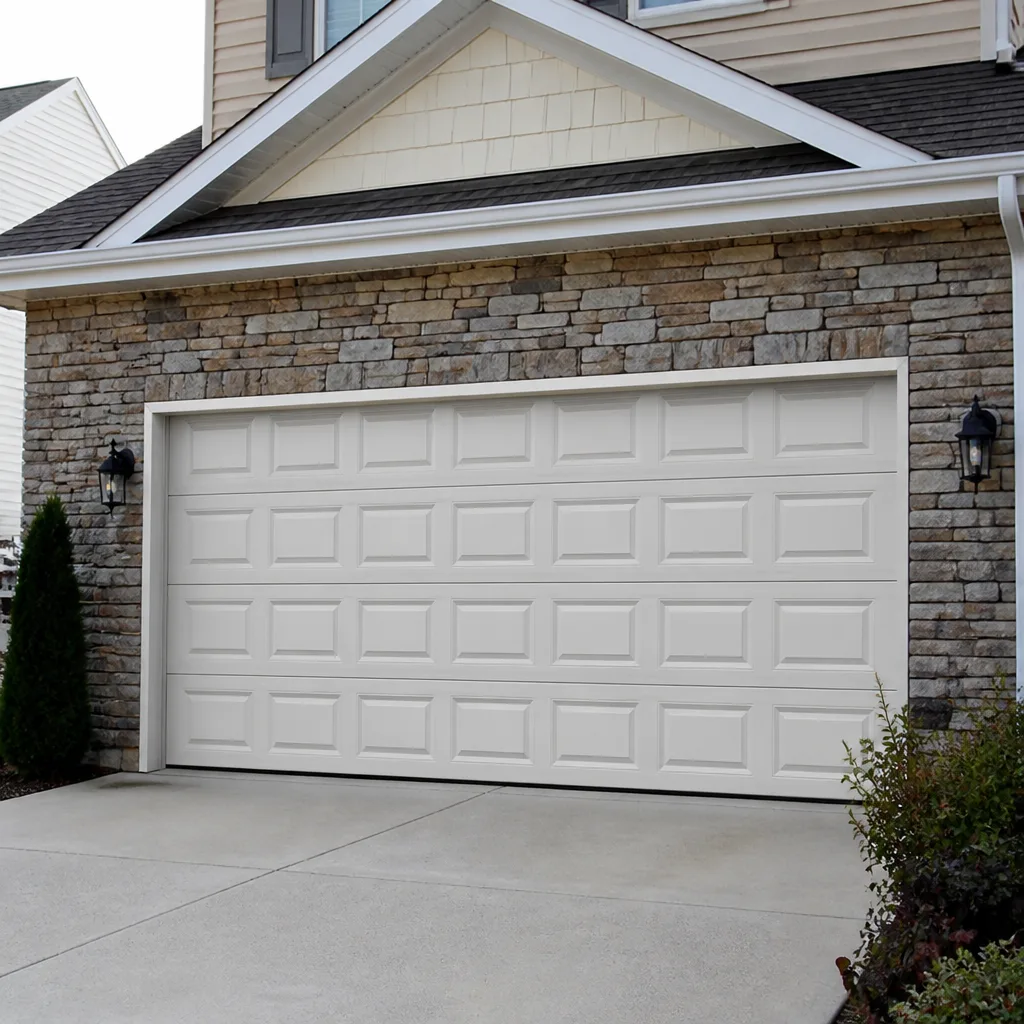 Raised-panel steel
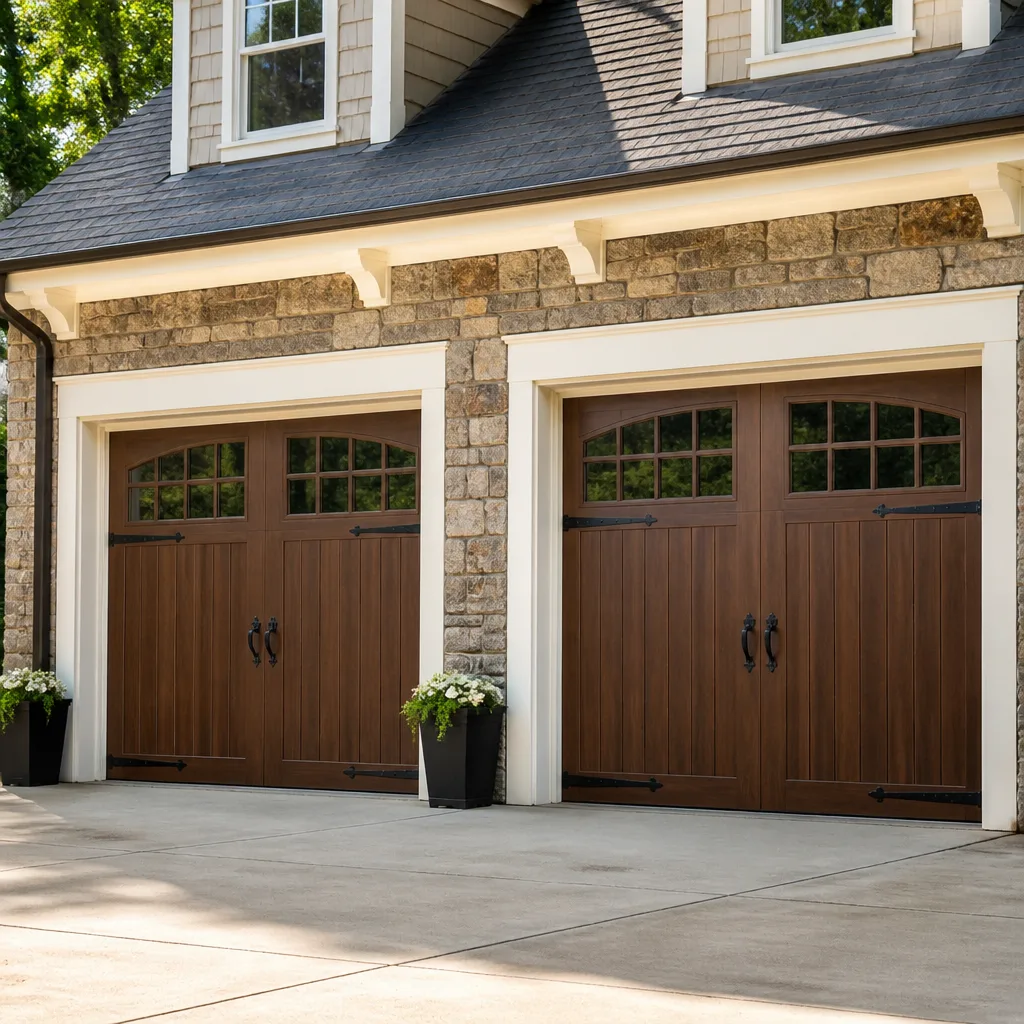 Carriage house
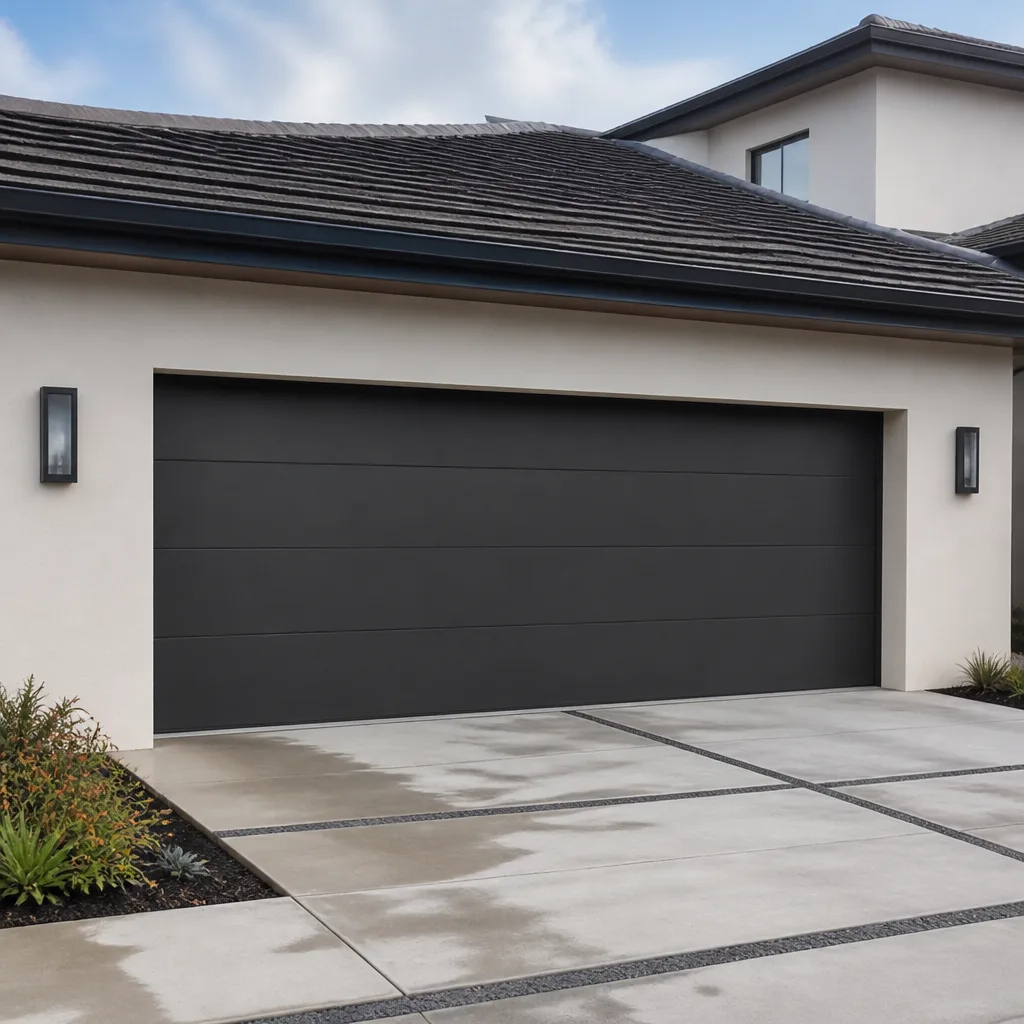 Modern flush
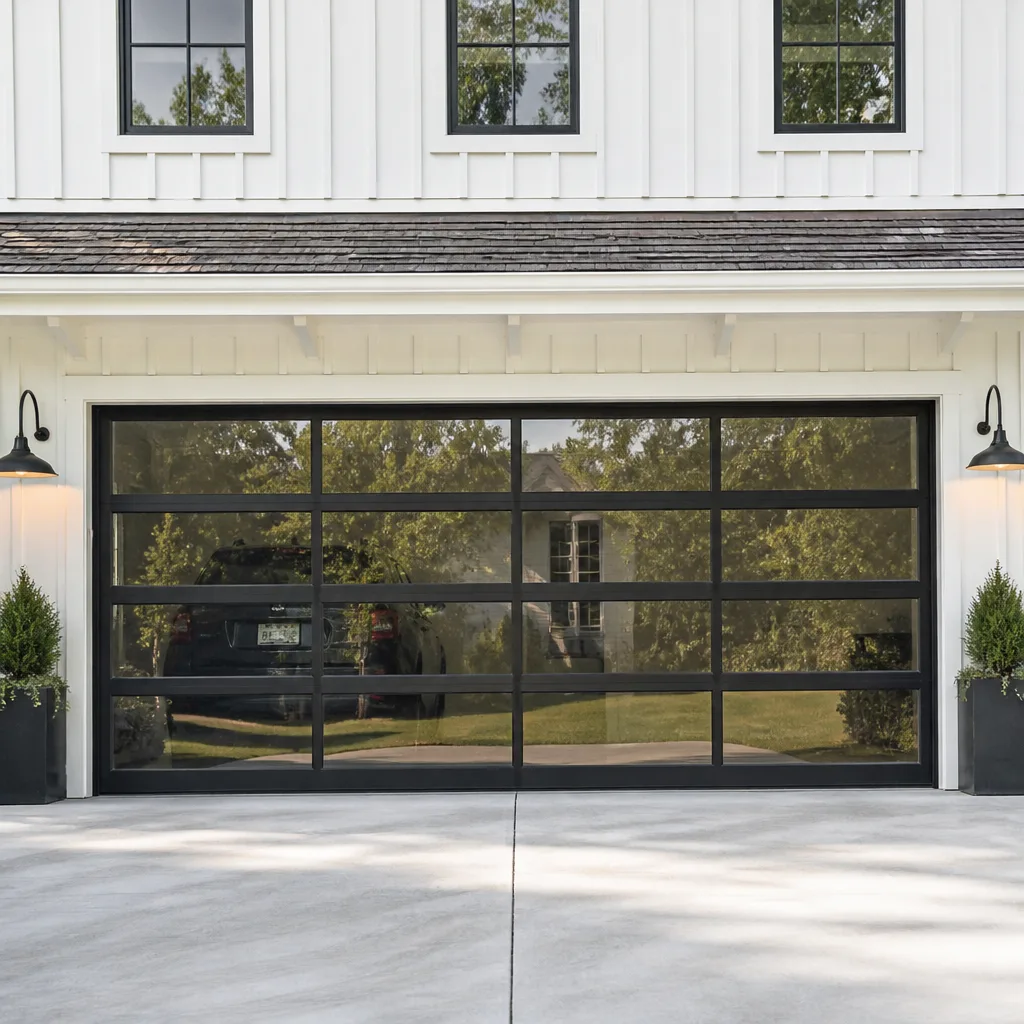 Full-view glass
 LiftMaster openers
 Chamberlain openers
Full 25-point door and opener safety check with every visit - springs, cables, rollers, tracks, and your LiftMaster or Chamberlain opener included
You get a price before we start. It does not change when the pro arrives.
Get your free estimateDIY vs Professional Garage Door: The Edmonds Homeowner’s Decision Guide
Most DIY-or-call guides hedge, because hedging keeps every reader on the page. We’d rather be useful. Here’s the plain version: garage door springs store enough energy to seriously injure you when they release, and that’s not a liability disclaimer, it’s a physics fact. It also draws a hard line through this trade. Some garage door jobs are genuinely fine for a careful homeowner. Others are not, no matter how handy you are. This guide separates the two, explains why a Craftsman opener from 2004 or a Wayne Dalton door with a bent panel lands on different sides of that line, and gives Edmonds homeowners a clear way to budget their time and money.
Quick Answer
On the DIY vs professional question, the deciding factor is stored energy, not skill. Anything under spring or cable tension – springs, cables, drums, the bottom bracket – is professional territory. Tasks with no stored energy in play, like repainting a panel, replacing a weatherseal, programming a remote, or snugging a loose hinge bolt, are reasonable for a competent homeowner. Broken springs, snapped cables, and off-track doors belong with garage door specialists.
Styles & brands we work with
- Raised-panel steel
- Carriage house
- Modern flush
- Full-view glass
- LiftMaster openers
- Chamberlain openers
Table of Contents
- The Stored-Energy Threshold: Where the DIY Line Actually Sits
- Tasks That Are Genuinely DIY-Appropriate
- Why Spring Repair Is Different From Every Other Job
- The Hidden Costs of a DIY Spring Attempt
- What a Professional Does in the First Ten Minutes
- The Edmonds Savings Calculation: Same-Day Changes the Equation
- Opener Troubleshooting vs Opener Repair
- A Decision Matrix You Can Use Today
The Stored-Energy Threshold: Where the DIY Line Actually Sits
A torsion spring on a residential door is wound tight and held in that state by a set screw and a pair of winding cones. It sits there, dormant, holding the full weight of the door in balance. On a standard garage door, that spring has been wound dozens of full turns during installation. The moment that spring is released without a winding bar in place and the right technique, the energy goes somewhere. Often that’s into the nearest solid object, and often that object is a person.
That’s the physics, and it’s why we draw the line where we do: any component under spring or cable tension is professional territory, full stop. Not because a homeowner isn’t clever enough. Because the stakes are dictating whether you go to work tomorrow.
Here’s the practical implication for an Edmonds homeowner:
- Under tension: extension springs, torsion springs, lift cables, safety cables, cable drums, the bottom bracket, the center bearing plate. Hands off.
- No stored energy: hinges, rollers (once the door is fully on the ground and relaxed, not on a live door), weatherseals, panels, paint, the opener arm connection, remotes, safety sensors. Fair game with caution.
A rough way to think about it: if the door needs to be up, or the spring needs to hold something while you work, that’s a sign you should stop. Garage door specialists work with a wound spring in front of their face every day, and the reason they can is training, tooling, and the discipline to check the balance before they touch anything else.
Tasks That Are Genuinely DIY-Appropriate
We like saving people money when the job is a five-minute fix. Here are the jobs we genuinely think a careful Edmonds homeowner can take on, provided you have the door fully down and the opener unplugged while you work.
- Repainting a steel panel or touching up a scuff. A Clopay or Amarr steel door with chipped paint will rust at the chip, especially during the wet stretches Edmonds gets from fall through spring. Sand, prime with a garage-door-rated metal primer, and top-coat with exterior paint. No tools beyond a brush, roller, and a drop cloth.
- Replacing the bottom weatherseal. A perished rubber seal lets water and small animals under the door. Most bottom seals slide out of an aluminum retainer and slide back in. Measure the width, order the correct profile, and slide it in with the door down.
- Programming a new remote or keypad. LiftMaster and Chamberlain use a “learn” button on the opener head; Genie uses a slightly different sequence. The manual for your model has the sequence in two pages. Ten minutes of reading, five of pressing buttons.
- Tightening a loose hinge bolt. If a hinge is rattling against the door, snug the bolt down. Don’t over-torque; sheet-metal hinges strip easily. Never touch the bolts that hold the cable drums or the bottom bracket.
- Clearing a safety sensor obstruction. If the door reverses immediately on closing, wipe the lens on both photo-eye sensors and check the alignment lights. Fifty percent of “the door won’t close” calls are a cobweb or a bumped sensor.
None of these tasks involve stored energy. All of them are jobs a homeowner can complete with hand tools and an hour. And all of them add real years to a door that’s otherwise in good shape.
Why Spring Repair Is Different From Every Other Job
Springs are the one garage door component we talk about with a different tone. Not because they’re complicated to explain, but because a wound spring is a stored load, and a stored load doesn’t care whether you’re experienced. The tension in an average torsion spring is measured in hundreds of pounds of potential pull. When it lets go, it lets go instantly.
Two things make spring repair genuinely difficult even for skilled hands:
- The winding process itself. Torsion springs must be wound to an exact number of turns, held with winding bars, and locked in place with set screws under tension. A single slip while the spring is being wound can turn a set of bars into projectiles. We’ve seen what happens when a homeowner uses a screwdriver instead of a proper winding bar. It’s not a story we enjoy retelling.
- Identifying the correct replacement. A spring is specified by wire gauge, inner diameter, and length. Get any of those wrong and the door will either sag, over-tension, or cycle out in months. Matching specs on a Craftsman-era door from the 1990s is sometimes the hardest part of the job.
The comparison to another trade is useful. You can unclog a drain. You can replace a light switch. You can’t safely defuse something under tension without the right tools and someone who’s done it dozens of times. Spring replacement done safely is a specialist’s job because the danger is in the component itself, not in the customer’s skill level.
That’s the reason we keep garage door spring repair in-house as a routine specialty. If we’re already diagnosing a door, we want the same people who know the balance of the door making the call on the spring.
The Hidden Costs of a DIY Spring Attempt
The instinct to DIY a broken spring is understandable: the spring is a $40-$80 part in most cases, and a pro job costs more. But the math on a DIY spring attempt almost never works out. Here’s what actually tends to happen when a homeowner takes a shot at it.
The door comes down. A door is balanced by two springs, and if one lets go while you’re under it – or if you release both to replace them together and get the tension wrong – the full weight of the door lands with it. A typical single-car door weighs well over a hundred pounds. A double can be more than twice that. A door that drops while you’re holding a winding bar is a serious injury scenario, and drop damage to the panels and tracks is another job on top of the original one.
The opener takes a hit. A door running out of balance forces the opener to do work it was never designed for. Most opener warranties specifically exclude damage from unbalanced doors or improper spring replacement. If the opener has been running hard while the door was out of balance, we sometimes find stripped gears inside the unit that a homeowner never suspected.
The second attempt costs more than the first. Replacing a spring once, correctly, is cheaper than replacing it twice – once botched, once corrected. The corrected job often comes with a bent track, a stripped drum, or a sagging door that needs adjustment as well.
We’ve been called to Edmonds homes where the diagnosis took ten minutes and the cleanup took two hours. That’s the pattern a DIY spring attempt follows in our experience.
What a Professional Does in the First Ten Minutes
One of the tell-tale signs of a DIY repair is what’s missing in the first ten minutes. A trained specialist walks up to a garage door with a routine, and the routine is diagnostic. Here’s what a garage door specialist does before touching a spring.
- Disconnect the opener. Pull the red release cord and work with the door on manual. Every safe garage door job starts with the opener out of the loop.
- The balance test. Lift the door halfway and let go. A balanced door stays put. A door that drifts down has a tension problem, and a door that drifts up has too much. Skipping this step is how a “spring replacement” turns into “why is the door slamming shut again after a week.”
- Cable drum inspection. Lift cables wind into drums at the top corners of the door. Drum wear, crossed cables, and a cable about to walk off the drum are all things a homeowner rarely checks. We see them in the first sixty seconds.
- Spring specifications read and matched. Wire gauge, inner diameter, and length. Not “close enough.” A pro matches the spring to the door weight, not to whatever’s on the shelf.
- Limit switch calibration on the opener. Openers have up-travel and down-travel limits that need to match the door’s actual range. Out-of-calibration limits cause the door to hit its stops too early, which stresses the opener every cycle.
None of those five steps costs extra. They’re just how a proper repair starts. The difference between a garage door repair that lasts five years and one that fails again in three months is usually decided before the spring is even unwound from its packaging.
The Edmonds Savings Calculation: Same-Day Changes the Equation
When people compare DIY cost to pro cost, they’re usually comparing only dollars. For an Edmonds homeowner, there’s a variable most comparison guides don’t account for: time from broken door to working door.
Most Edmonds addresses are reachable the same day when you call a local garage door specialist. That’s a real number to plug into the savings calculation. If a DIY spring job takes an entire Saturday, plus the risk of a second attempt if something goes wrong, plus the chance you have to call someone anyway – the savings shrink fast. Factor in a day of lost access to the door, a car stuck in the garage, or a home that’s been left unsecured overnight, and the math changes again.
Our garage door repair coverage reaches most of Edmonds on the same day a call comes in. That doesn’t just affect the dollars; it affects how quickly the household gets back to normal. A door that opens and closes at breakfast time is worth more than the difference between a DIY attempt and a professional repair for most of the homeowners we talk to.
The one nuance: same-day timing applies to repairs. If you’re replacing a door, ordering the panels and scheduling the install takes longer than a repair does, so don’t expect the schedule to be the same.
Opener Troubleshooting vs Opener Repair
Openers sit on a gray line. There’s a fair amount a homeowner can safely diagnose, and a fair amount they can’t. Here’s a realistic split for the brands we work on most – LiftMaster, Chamberlain, Genie, Craftsman, and Raynor openers all have their own quirks, but the split is roughly the same across all of them.
Troubleshooting you can do:
- Check the wall outlet the opener is plugged into.
- Test the wall switch vs a remote to isolate a bad remote.
- Reprogram remotes and keypads using the model’s manual.
- Wipe and realign the safety sensors.
- Check the photo-eye LED on both sensors – most models tell you which side is failing.
- Verify the opener isn’t in “lock” mode if the wall switch was accidentally held.
Repair territory:
- Replacing the logic board, capacitor, or drive gear.
- Resetting travel limits when they’ve drifted badly enough to trip the reversal.
- Diagnosing a belt or chain that’s jumping off the rail.
- Replacing the drive sprocket or the gear assembly inside the opener head.
- Any repair on a wall-mounted jackshaft opener, which involves the door’s torsion system.
When we handle garage door opener repair, most of the brand-specific work is about knowing the unit before the cover comes off. A Craftsman opener from the 2000s and a current LiftMaster can look almost identical until you’re inside. The parts don’t interchange.
A Decision Matrix You Can Use Today
The fastest way to make a call on a garage door issue is to match it to the component and the stored energy in play. Here’s the plain matrix.
| Problem | DIY or Pro? | Why |
|---|---|---|
| Scuffed or peeling panel paint | DIY | No tension involved |
| Worn bottom weatherseal | DIY | Door down, no tension on the seal |
| Remote or keypad not working | DIY | Programming only |
| Loose hinge bolt | DIY | Door down, no tension |
| Door reverses on closing | DIY check, then Pro | Sensor first; if not the sensor, call |
| Broken spring (torsion or extension) | Pro | Component under high stored energy |
| Snapped lift cable | Pro | Cable is under spring tension |
| Door visibly off-track | Pro | Door can fall; do not force it shut |
| Opener runs but door doesn’t move | Pro | Likely drive gear, opener arm, or spring, all specialist territory |
| Door out of balance (won’t stay halfway) | Pro | Spring tension diagnosed and reset by a specialist |
If the issue doesn’t fit a row cleanly, treat it as Pro. The cost of a diagnostic call on a garage door in Edmonds is smaller than the cost of a panel replacement when a door drops out of the track, and a garage door specialist can usually tell you on the phone whether it’s worth rolling a truck.
Common Mistakes to Avoid
- Using a screwdriver as a winding bar. We’ve seen it more than once. A screwdriver doesn’t seat into the winding cone, and it snaps under the load. Use a proper pair of winding bars or don’t unwind the spring – there’s no middle ground.
- Replacing one spring of a matched pair. Springs are matched at installation. The second spring is under the same cycle count and typically fails within a few months. On most doors we recommend replacing the pair together, and the estimated price for a pair is roughly double the single-spring price.
- Forcing an off-track door back into the track. A door that’s jumped the track is carrying spring tension that wants to snap it back out. In an Edmonds home with a car parked beneath, that’s a repair that turns into a car repair. Stop, prop nothing, call.
- Adjusting the opener travel limits without checking balance first. Homeowners often reset limits to get the door to close. The limits then hide a spring problem, and the opener does more work until it burns out. Fix the balance, then the limits.
- Painting a steel door while the weather seal is still installed. Paint runs under the seal, sticks the rubber to the frame, and the door won’t release cleanly. Pull the seal first.
- Ignoring the safety sensors when the door reverses. More Edmonds door calls than we’d like are sensors knocked out of alignment by kids, pets, or a bumped bicycle. That’s a fifty-cent fix if caught.
- Assuming the brand means the part. A Wayne Dalton door and a Raynor door can look identical at ten feet. The hardware isn’t interchangeable. Ordering the wrong torque tube or hinge is the most common DIY-on-brand-name mistake we see.
See the difference
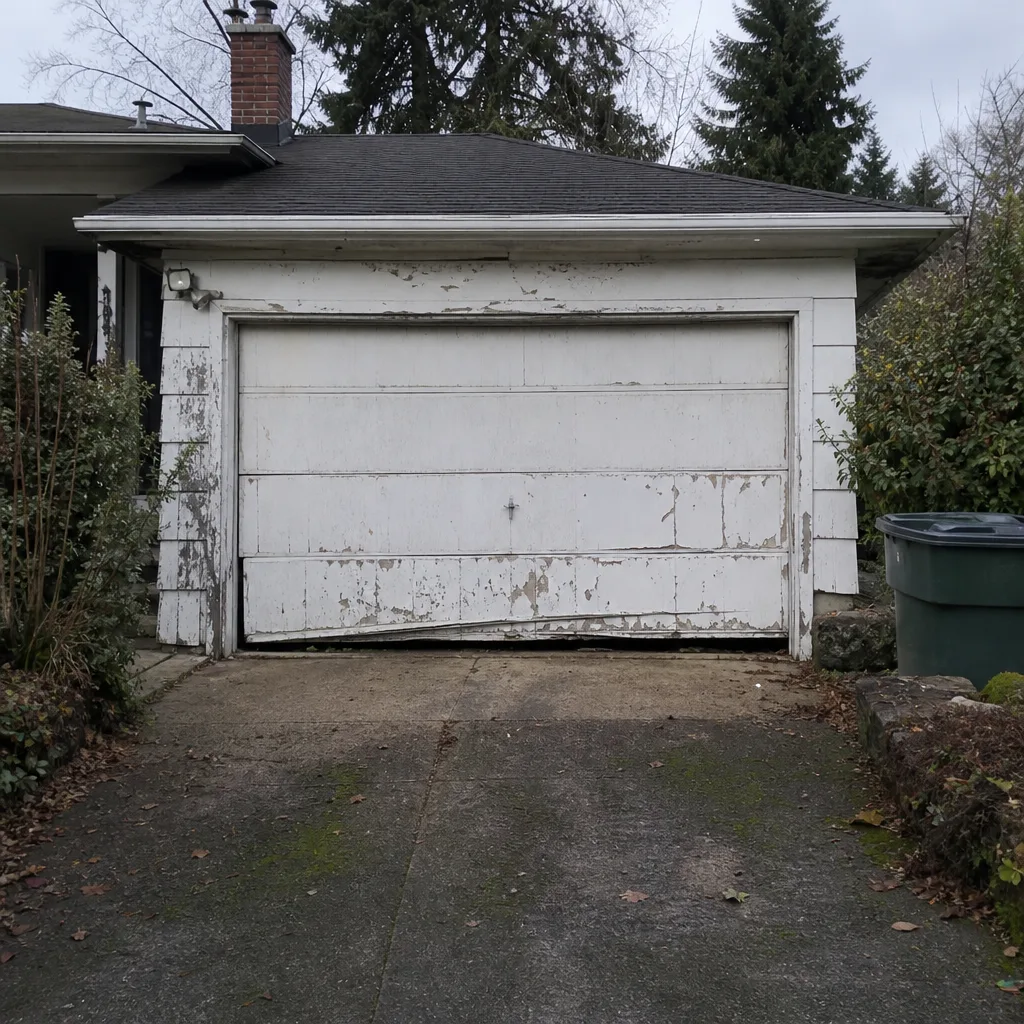 Before
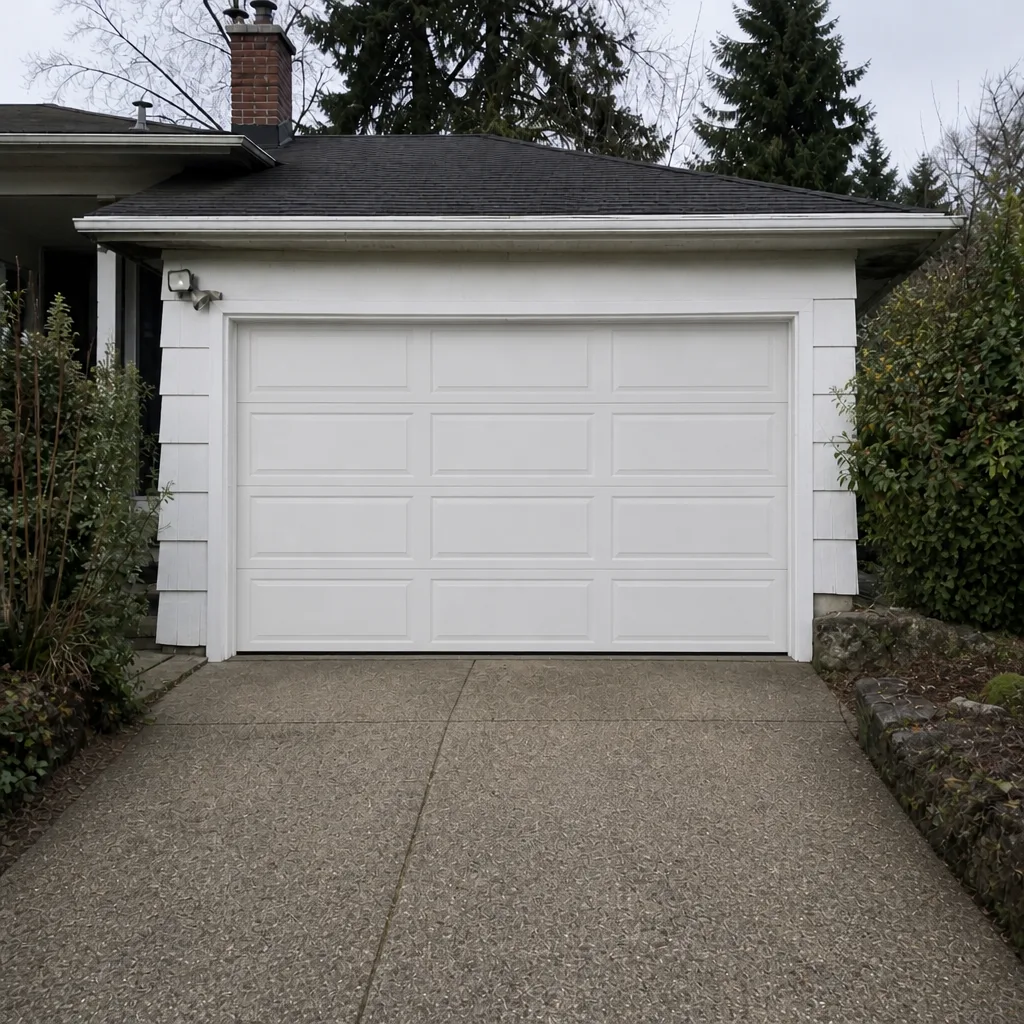 After
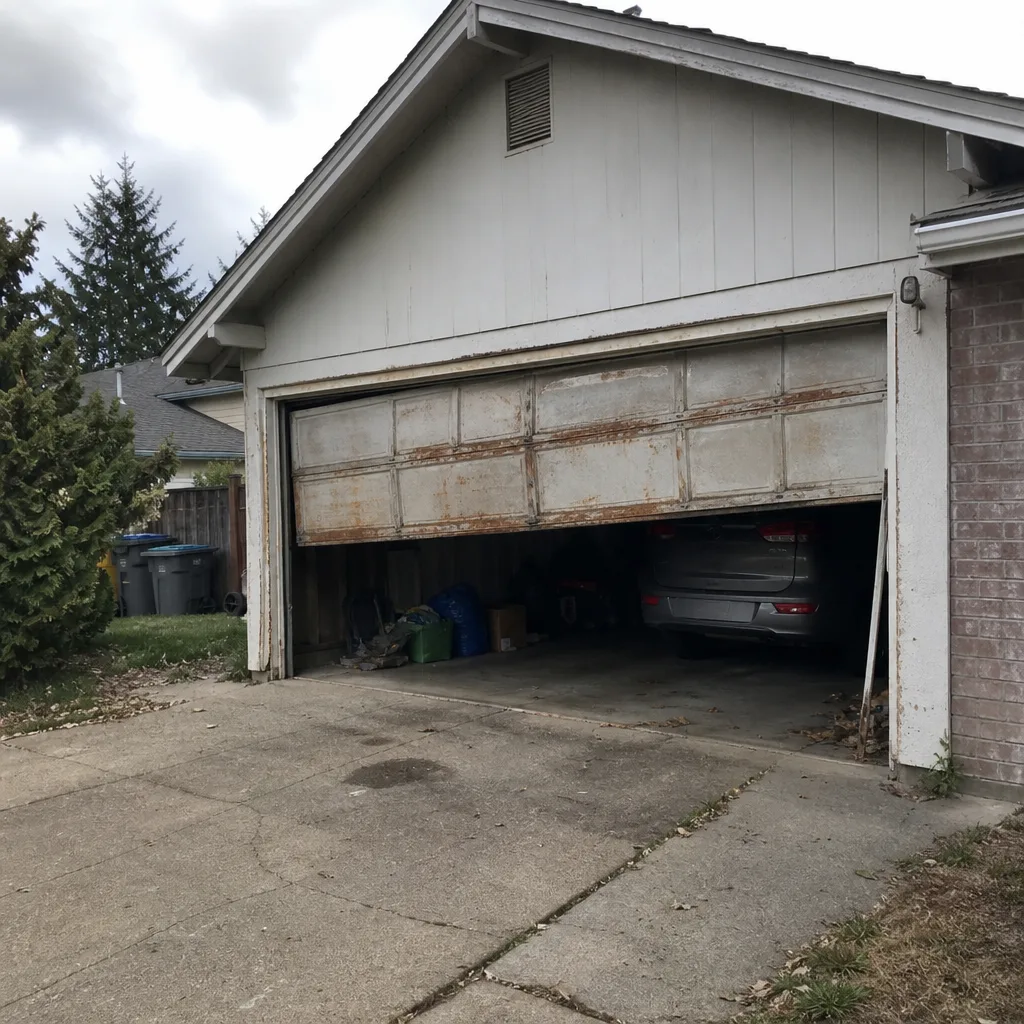 Before
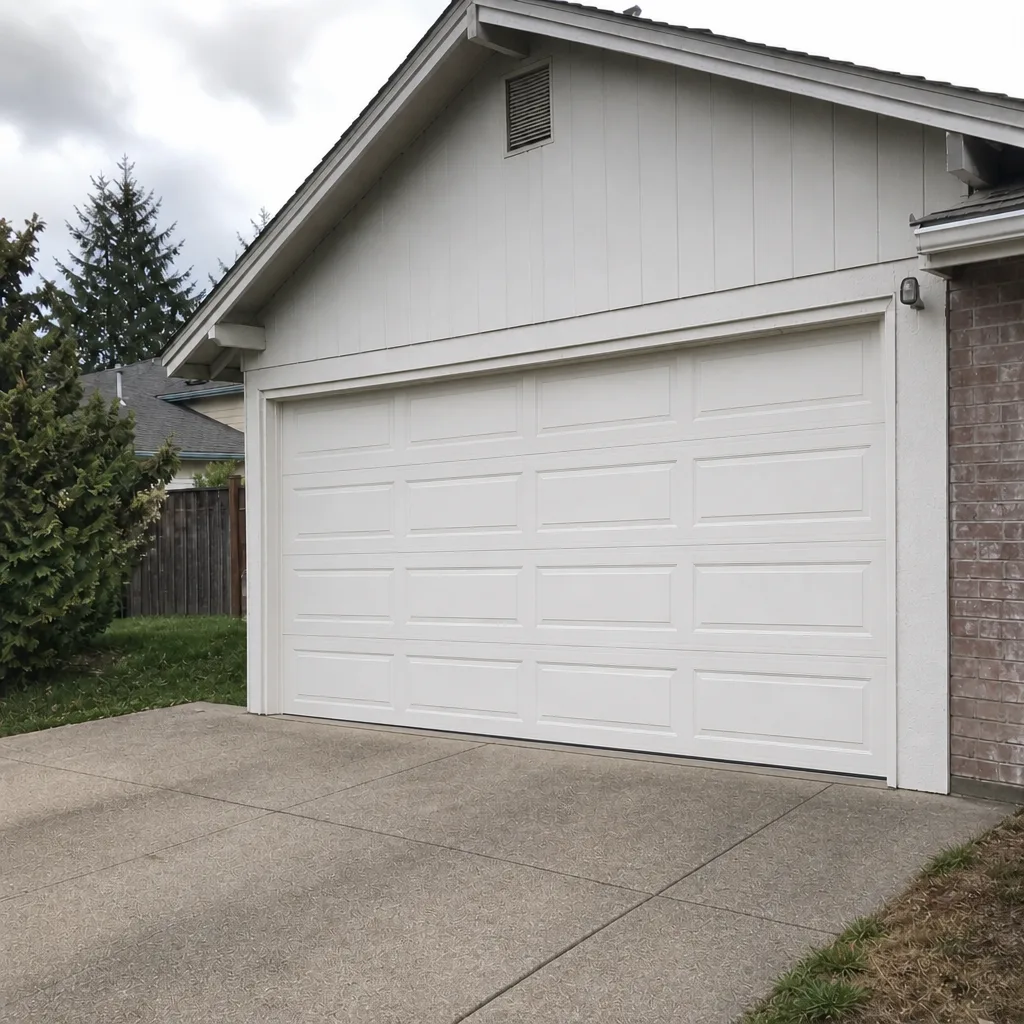 After
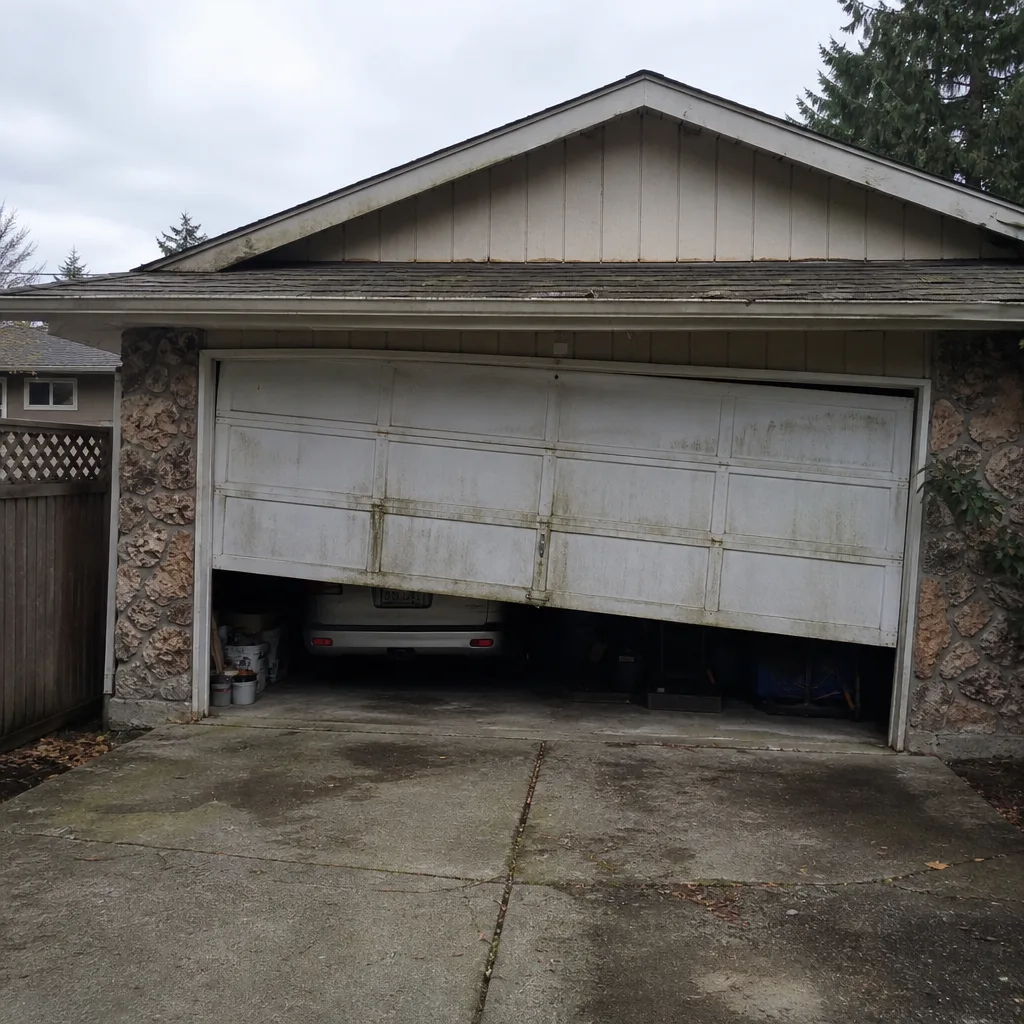 Before
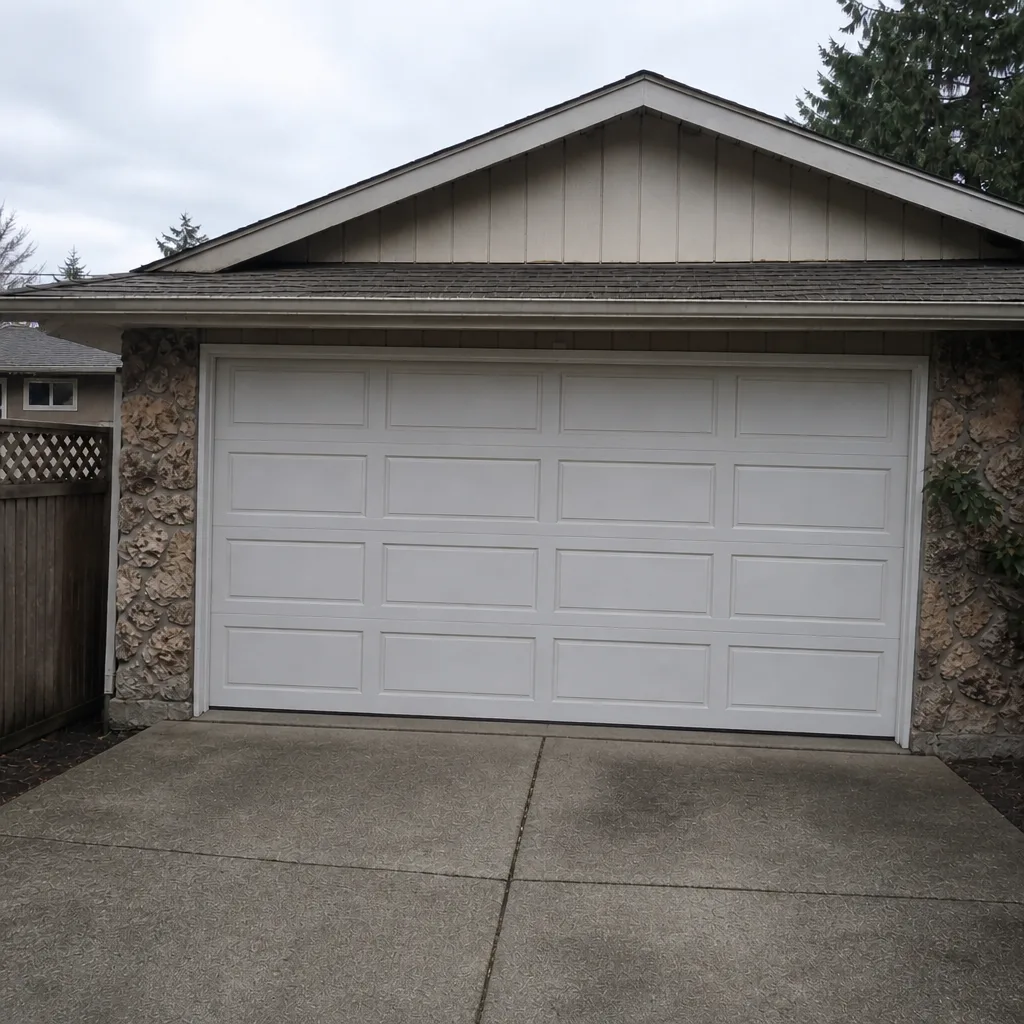 After
When to Call a Professional
Call a professional the moment anything under spring or cable tension is involved, or the door has left its track. That includes a broken spring of any kind, a snapped cable, a door stuck open or closed, a door that has crashed down, a bent bottom section, or an opener that has run its drive gear out. It also includes a garage door you can’t lift at all, which means both springs may have failed.
Edmonds Garage Door Repair Pros offers free estimates in Edmonds – call (844) 651-9427. We work on LiftMaster, Chamberlain, Genie, Clopay, Amarr, Wayne Dalton, Craftsman, and Raynor systems, and the local pro who comes out is licensed and insured as their state requires. For urgent situations, our emergency garage door service is a standing offering, not an upcharge tier – a broken door that leaves your home open or your car trapped is the reason that service exists.
For a broader look at our full range, from a stuck door to a full installation, see Edmonds Garage Door Repair Pros.
Frequently Asked Questions
No, and we’d gently push back on any guide that tells you otherwise. Torsion and extension springs hold stored energy that releases instantly if wound or unwound incorrectly, and the injury risk is genuine rather than theoretical. The tools are specific, the spec matching matters, and the door itself is heavy enough to injure anyone under it. Call a garage door specialist; the written estimate is set before any work starts.
Typical spring repair in the Edmonds area runs from about $180 to $340 for a single torsion spring, and a matched pair is usually replaced together, so a pair is roughly double that range. The exact price depends on spring type, door size, and whether anything else was affected when the spring let go. We quote and agree the price before any work starts, and the written estimate is the final answer. Call (844) 651-9427 for an exact quote – estimates are free.
Repainting panels, replacing the bottom weatherseal, programming remotes, tightening a loose hinge bolt, and clearing or aligning safety sensors are all tasks we consider DIY-appropriate. The common thread: no component under spring or cable tension is involved. Anything touching the springs, cables, drums, or bottom bracket belongs with a professional.
It can. Most opener manufacturers exclude damage caused by an unbalanced door or by spring work done outside their service guidelines, and many don’t cover damage to the drive system when a spring failure was the original cause. If you’re weighing the savings on a DIY spring job, factor in what an opener replacement would cost if the warranty is contested. Call us at (844) 651-9427 before you take that risk.
Usually yes. Spring repair is same-day work for most Edmonds addresses when you call a local garage door specialist during business hours. We can also work with most addresses on a repair scheduled for early morning or Sunday if the timing is tight, though we’re closed on Saturday. If no same-day slot is available, the next available appointment is booked and quoted up front. Call (844) 651-9427 to check.
Repair usually wins unless the door has multiple bent panels, a rotted bottom section, or age-related sag that a repair won’t fix. A single spring replacement or a cable repair brings an otherwise sound door back to full function for far less than a new door. If the structure itself is failing, new-door installation is the better call and is scheduled rather than same-day, so the panel can be measured and ordered. Call (844) 651-9427 and we’ll tell you straight which side of that line your door is on.
The Bottom Line
Garage door repair splits cleanly: anything under stored energy is professional work, and everything else has a reasonable DIY answer for a competent homeowner. Springs, cables, drums, and the bottom bracket all fall on the professional side of that line because the danger is in the component, not in your skill. Panels, seals, remotes, and loose hinges are the other side. If you’re in Edmonds and unsure which side a problem falls on, a call answers it in a couple of minutes. We’d rather help you avoid a DIY mistake than clean one up.
When it’s time to bring in help, call (844) 651-9427 for a free estimate on repair, spring replacement, opener repair, or a new-door install.
Written by the team at Edmonds Garage Door Repair Pros.