Last updated November 23, 2026
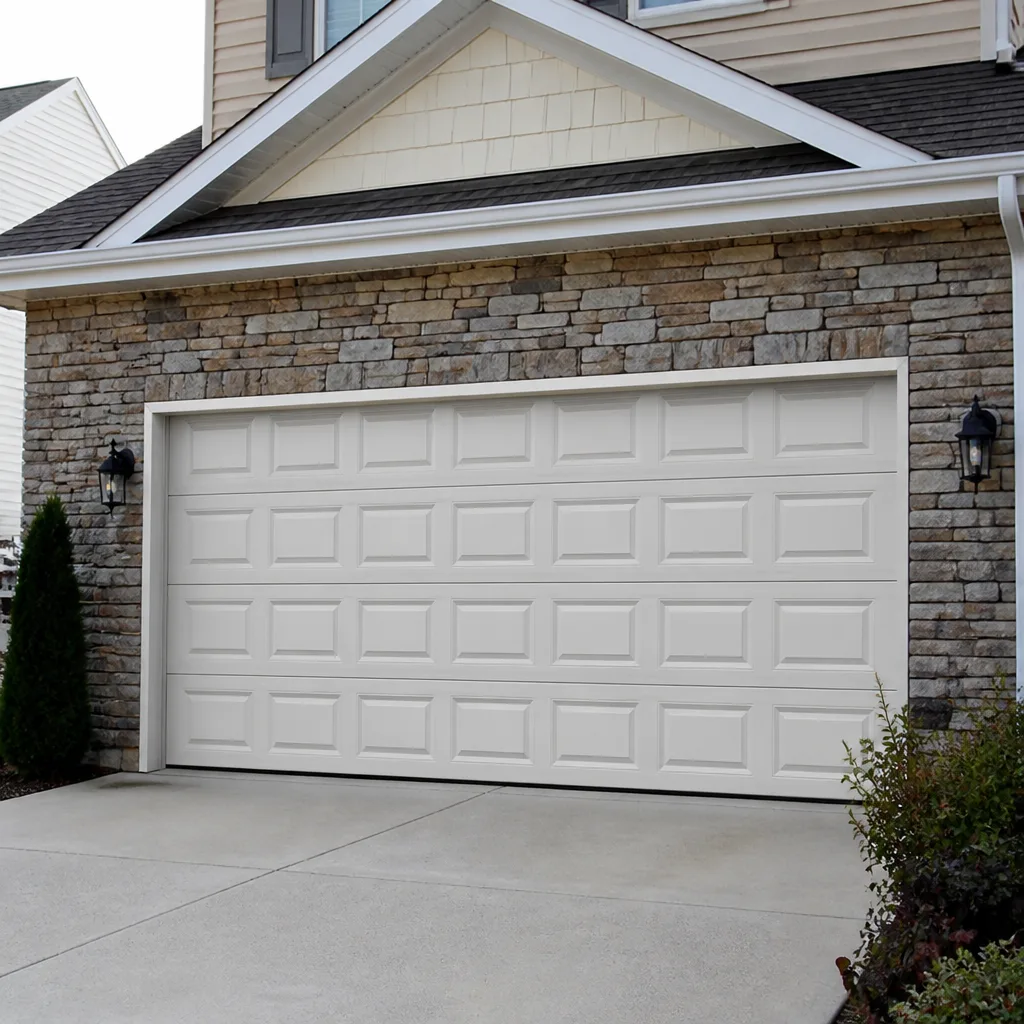 Raised-panel steel
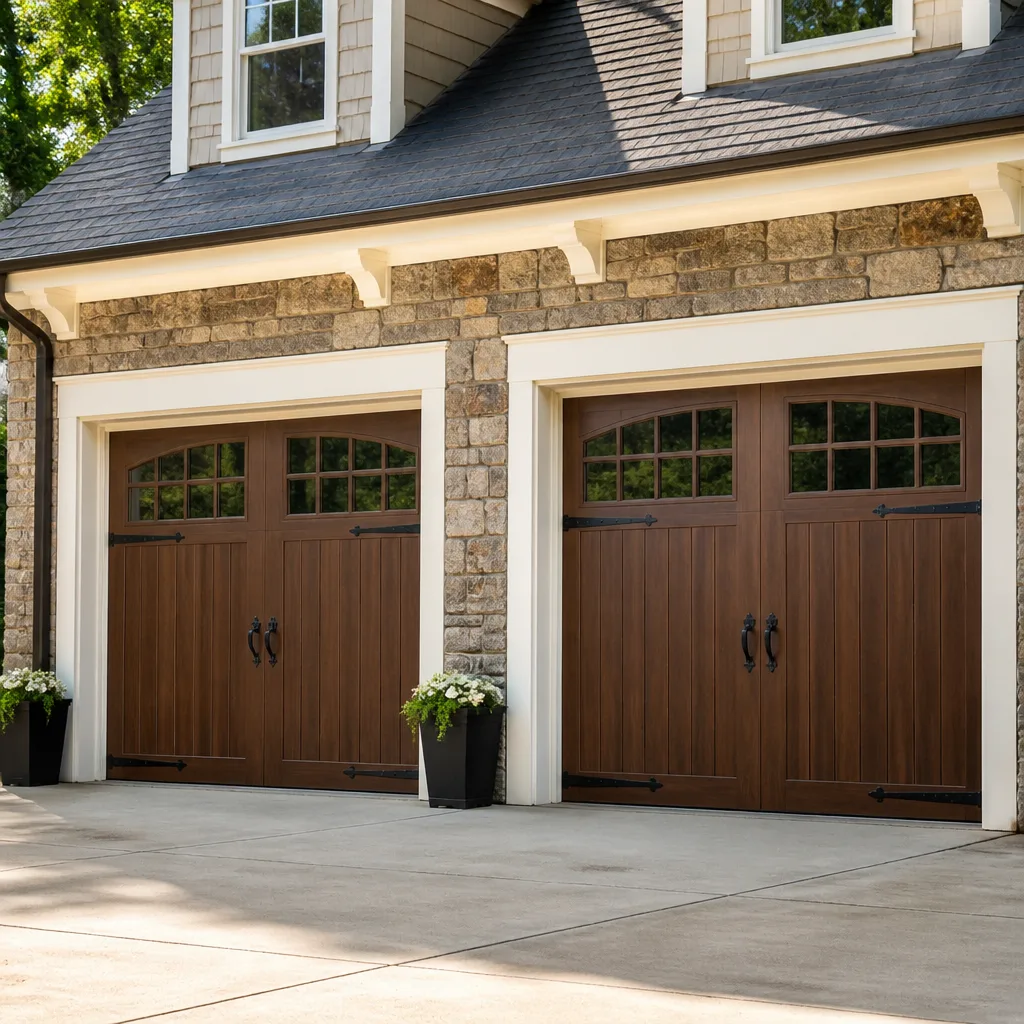 Carriage house
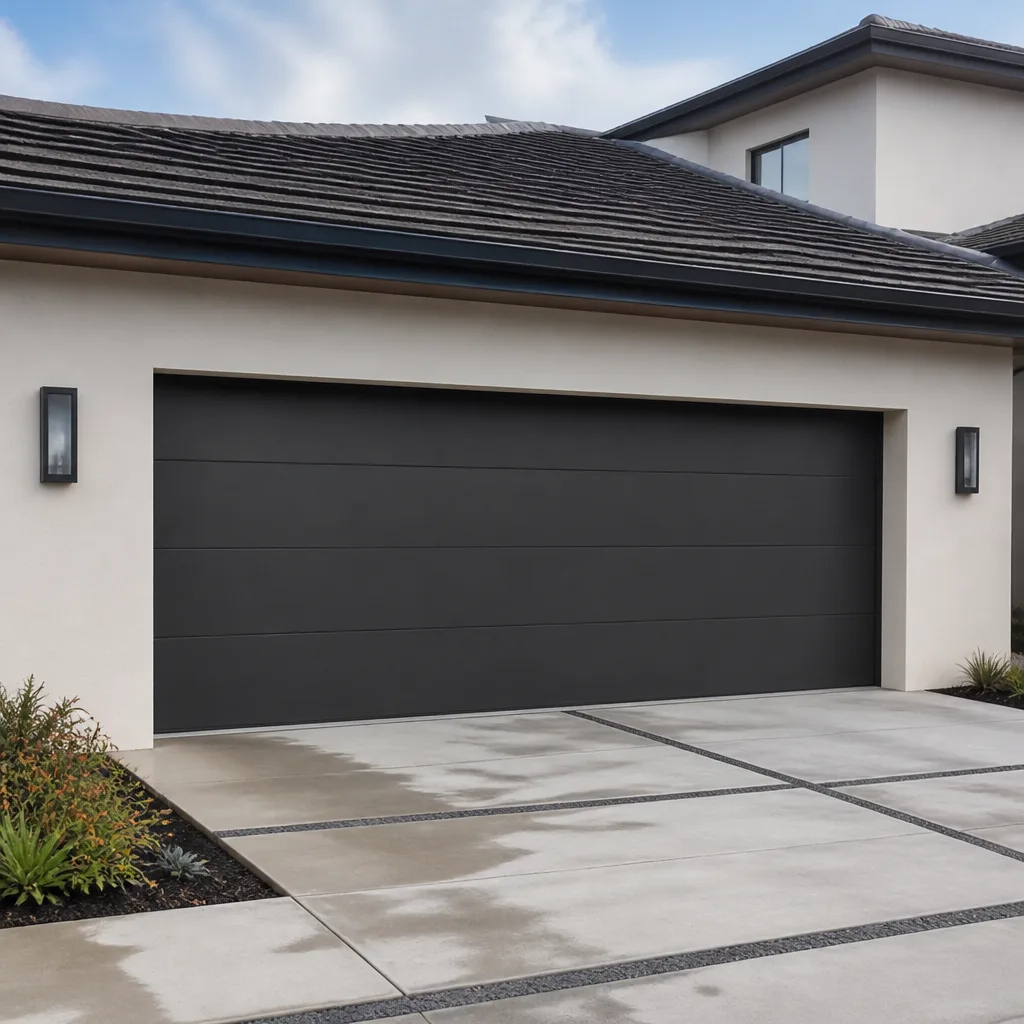 Modern flush
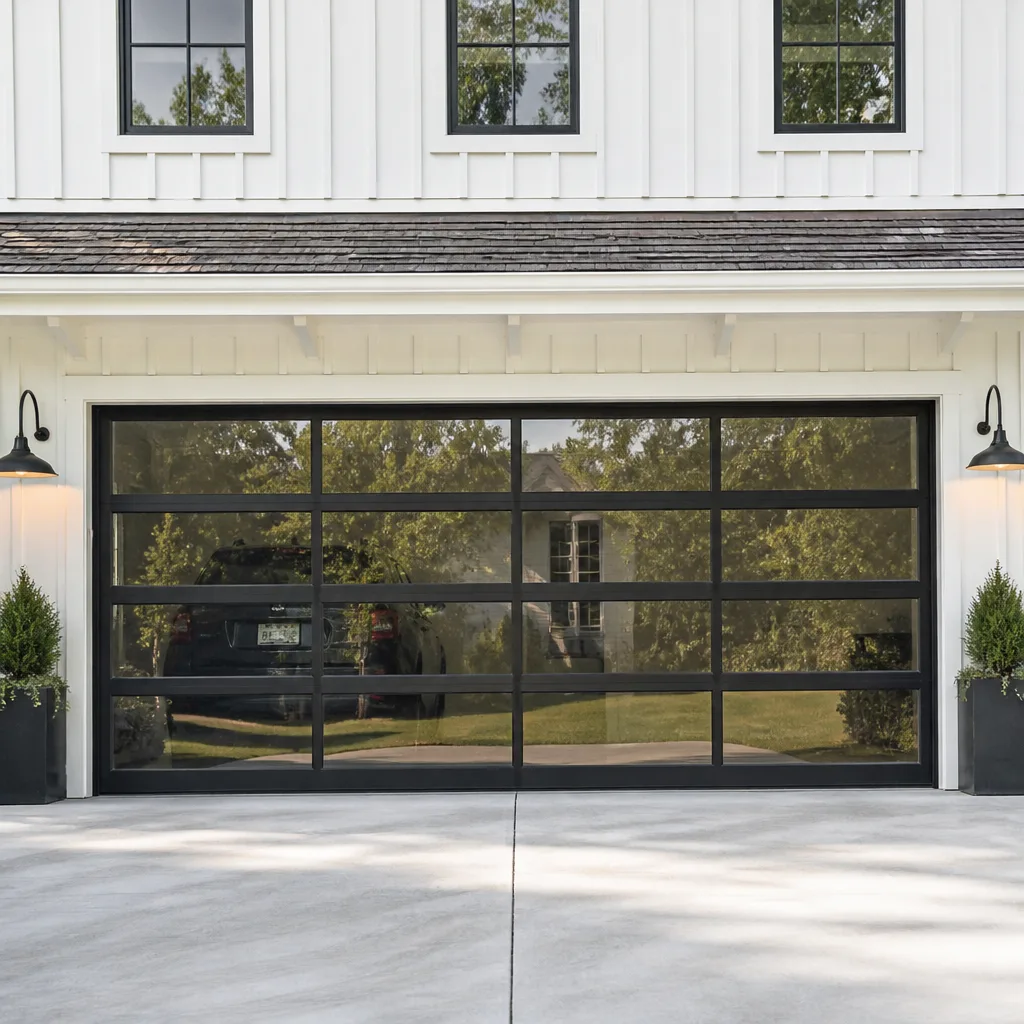 Full-view glass
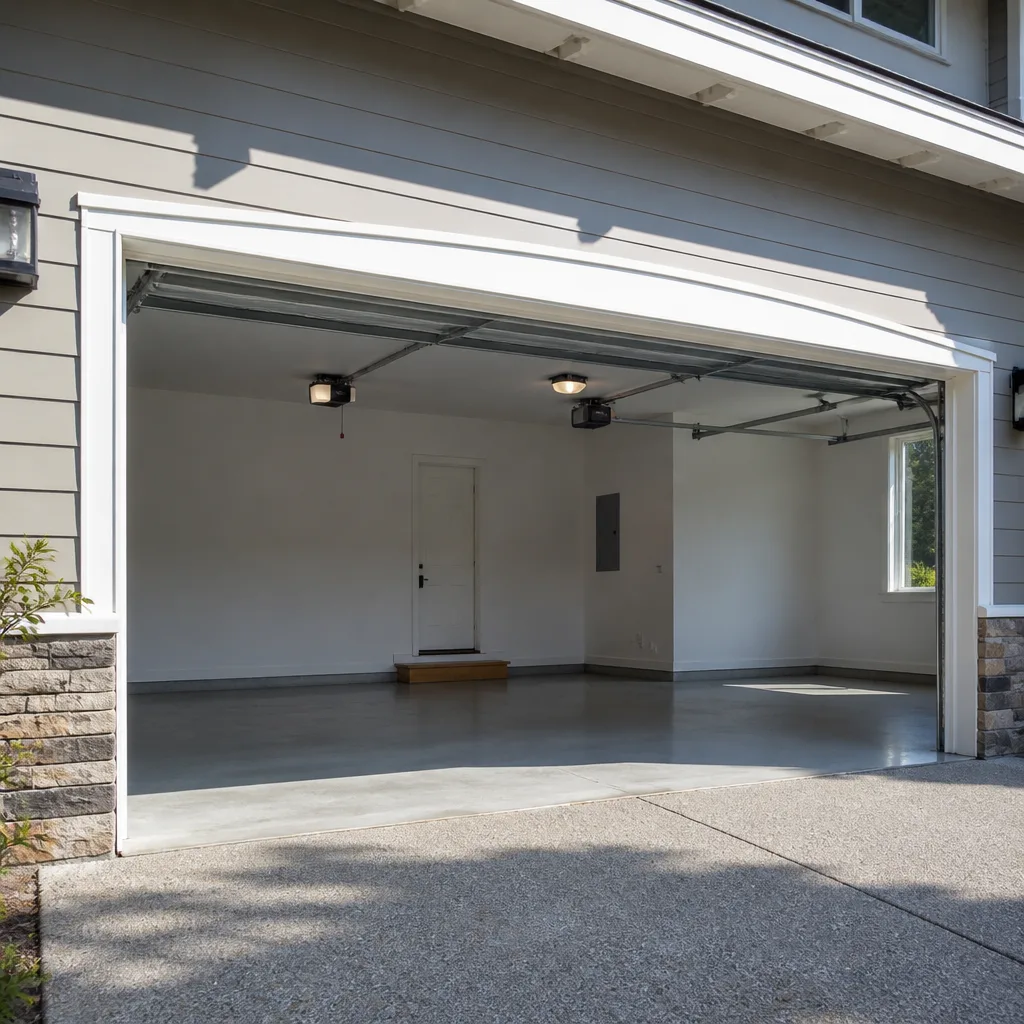 LiftMaster openers
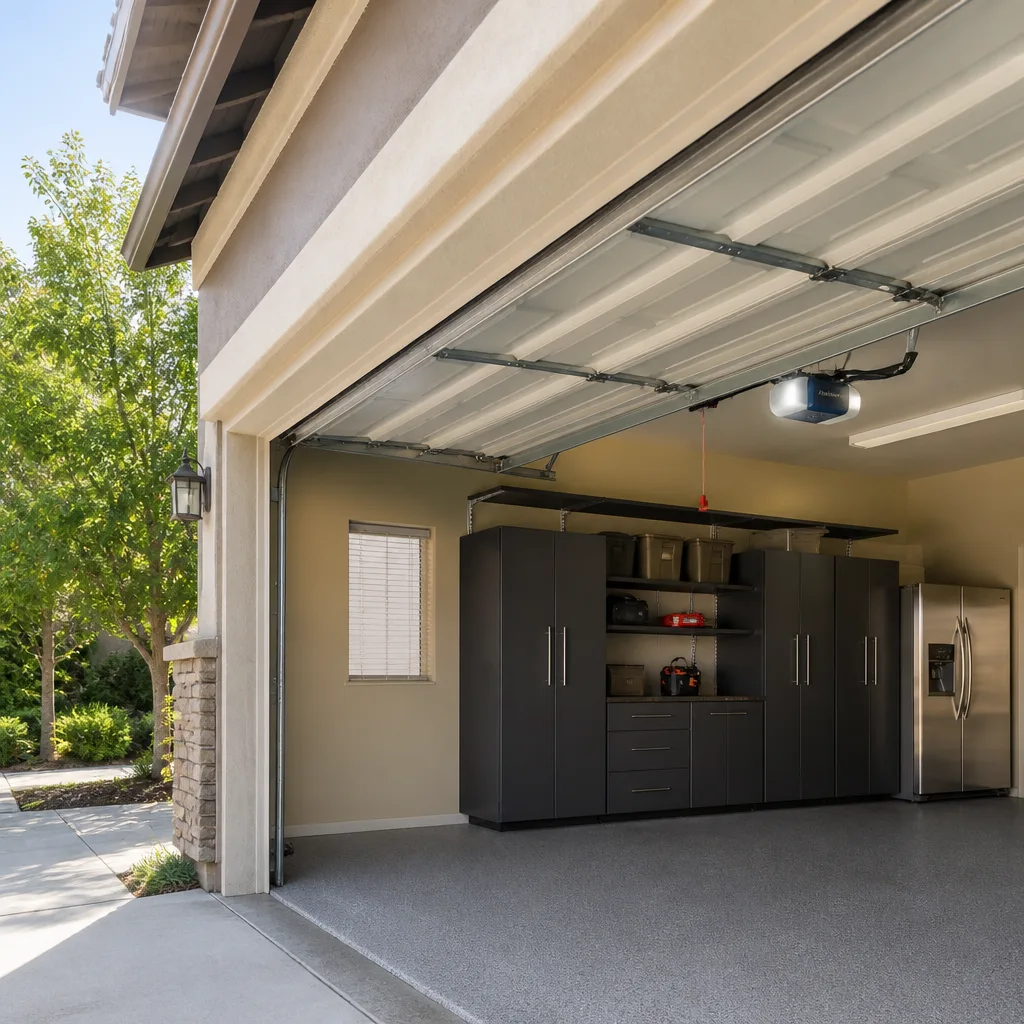 Chamberlain openers
Full 25-point door and opener safety check with every visit - springs, cables, rollers, tracks, and your LiftMaster or Chamberlain opener included
You get a price before we start. It does not change when the pro arrives.
Get your free estimateThe Complete Guide to Garage Doors in Edmonds
Most garage door advice you’ll find online was written for a hot, dry, landlocked suburb. It assumes flat driveways, cheap builder-grade doors, and air that doesn’t eat metal. Edmonds is none of those things. The garage doors here sit in one of the wettest corners of the country, they hang off driveways that cut into hillsides, they’re attached to cedar-sided Craftsman homes and mid-century ramblers, and they face a marine climate that punishes the wrong material choice within a few wet winters.
That reality changes almost every decision. Which steel gauge you should buy. Which opener has the torque for a sloped approach. Whether a wood-composite door survives our weather. This guide covers all of it from the perspective of people who work on Edmonds garage doors for a living, using the brands we know well and the local conditions we actually see.
Quick Answer
The best garage door for an Edmonds home balances three things: a heavier-gauge steel or fiberglass panel to handle our wet marine climate, an opener with enough torque for the grades and tight clearances common on local lots, and a door style that matches the Craftsman and cedar architecture you see across town. Repair and spring work is almost always cheaper than replacement, so get the door evaluated before you assume you need a new one. A written estimate should always come before any work starts.
Styles & brands we work with
- Raised-panel steel
- Carriage house
- Modern flush
- Full-view glass
- LiftMaster openers
- Chamberlain openers
Table of Contents
- Why Edmonds Garage Doors Fail Differently Than Inland Washington
- Why Steel Gauge Matters More in Edmonds
- Sloped Driveways, Lot Grading, and Door Clearance
- Panel Materials: What Holds Up Against Coastal Moisture
- Matching Your Door to Edmonds Architecture
- Permit Triggers: Replacing vs. Repairing
- Brand Fluency and Why It Saves You Money
- Repair or Replace? A Decision Framework
Why Edmonds Garage Doors Fail Differently Than Inland Washington
The single biggest reason Edmonds garage doors age the way they do is moisture, and how often the metal stays wet. An inland Washington city might see a similar annual rainfall number, but the moisture dries off quickly. In Edmonds, the combination of steady rain, high humidity between storms, and a Puget Sound climate that keeps surfaces damp for longer stretches means steel doors spend far more of the year holding a thin film of water on their surface. That film is where oxidation begins.
There’s a second factor that catches a lot of people: architecture. Edmonds has a heavy concentration of cedar-sided homes, Craftsman bungalows, and mid-century ramblers. That means a large share of the garage doors in town are either wood, wood-composite, or steel panels meant to mimic wood grain. Wood and composite doors are beautiful. They also need more attention in a wet climate than a factory-finished steel panel does. A door that spends its life under cedar trees, holding moisture on its north face, will look dramatically different after five wet seasons than the same door on a dry inland property.
Then there’s the slope issue. Edmonds sits on a series of ridges and bluffs that step down toward the water, and a lot of driveways rise or fall to reach the garage. A sloped approach affects how the door seats, the clearance under the bottom seal, and which opener you can actually use. We’ll get to that. For now, the short version: your door faces a wetter, sloped, tree-laden environment than most online guides assume. Every decision below flows from that.
What this means for you
- Steel doors in Edmonds benefit from higher-gauge, factory-finished construction more than the same door would inland.
- Wood and composite doors need scheduled refinishing and frequent inspection for rot at the bottom edge.
- Sloped driveways create recurring seal and clearance issues that a poorly matched opener can’t compensate for.
- Debris from mature cedars and firs fills tracks and stresses rollers faster than most homeowners expect.
Why Steel Gauge Matters More in Edmonds
If you’re buying a steel garage door in Edmonds, the gauge of the steel is the number that matters most for long-term performance. Gauge is measured in reverse: a lower number means thicker steel. A 24-gauge door is thinner than a 20-gauge door, and a 20-gauge door resists dents, flexing and oxidation far better than the thin stuff. In a dry inland city, a lightweight 24-gauge door might hold up for years without complaint. In Edmonds, the same door faces humidity, temperature swings near the water, and constant rain exposure, and the thin panels show it first. Thinner steel panels flex more under wind load, dent more easily when a bike leans against them, and the factory finish has less substrate to protect.
Here’s the practical guidance. If your garage door faces the prevailing weather or sits on the shaded north side of a cedar-heavy lot, don’t default to the cheapest steel door in the catalog. Spend for 20-gauge or heavier, and confirm the finish is factory-applied rather than a field-applied paint that will chip and let moisture underneath. Clopay and Amarr both build heavier-gauge steel doors that suit local conditions, and their factory finishes hold up better than anything painted on-site.
A quick way to think about gauge
- 20-gauge or heavier: best choice for wet-exposed elevations in Edmonds; resists flex and oxidation better.
- 24-gauge: acceptable on sheltered, wind-protected elevations, but not the door to choose on an exposed side of the house.
- Anything with a field-painted finish: avoid on a truly wet, shaded wall; moisture finds chipped paint and starts working under it.
A thicker door also weighs more, which changes your opener requirements. Keep that in mind when we get to torque below. For a fuller pricing picture on a repair, see our page on garage door repair, since a reinforced, heavier door that starts to bind often shows up as a repair call rather than a replacement.
Sloped Driveways, Lot Grading, and Door Clearance
A lot of Edmonds driveways rise or fall to reach the garage, and the door has to work with that grade rather than against it. When the approach is sloped, two things happen. First, the bottom seal doesn’t sit flush against the floor across its full width, so water and cold air find gaps. Second, tilt-up and overhead doors need enough overhead clearance to operate through their full arc, and a slope can eat into that clearance in ways a flat driveway never reveals.
Slope also affects opener selection. A door that has to travel down toward the driveway or up a grade adds resistance, and a lightweight opener rated for a lighter door will run hot and give out prematurely. The fix isn’t always a bigger opener. Sometimes it’s adjusting the door’s travel limits and spring balance so the opener has less work to do. But when the grade is significant, a heavier-duty chain-drive or belt-drive unit is the right call, and Genie and LiftMaster both make models that handle that workload.
What to check on a sloped driveway
- Lower the door and look at the bottom seal. Is there a uniform gap, or is one end lifting?
- Check the overhead clearance above the highest point of the door’s travel. Slope and low ceilings can combine to leave very little room.
- Watch the door through a full open-and-close cycle. It should move smoothly, not slow down, speed up, or hesitate at the slope.
- Listen to the opener. Groaning, straining, or a door that needs a nudge means the opener is fighting the door and needs attention.
- Look at how water drains off the sloped driveway. If it runs toward the garage, the bottom seal and threshold are doing real work.
One more local note: on narrow lots and tight driveways, cars often park close to the door, and some Edmonds homes have garages that open onto an alley or a steep side setback. That limited swing room is a reason spring and track work has to be done precisely. Spring replacement done safely is not optional here, because a spring that’s under- or over-tensioned will eventually fail and a door that binds in a tight space is a real safety concern.
Panel Materials: What Holds Up Against Coastal Moisture
Material choice is the decision that most determines how a door looks and performs after five or ten wet winters in Edmonds. Here’s how the three main choices actually behave in our climate.
Steel
Steel is the most common choice for a reason. A factory-finished, heavier-gauge steel door handles moisture well as long as the finish stays intact, and it won’t rot or warp. The failure mode isn’t the steel itself; it’s the finish. When the paint chips or the bottom edge holds standing water, rust starts there and spreads. On a north-facing or wind-exposed wall in Edmonds, inspect the bottom rail and lower panel annually and touch up any bare spots.
Fiberglass
Fiberglass doors resist dents and rust, and they don’t care about humidity the way steel does. They’re lighter, which can be easier on your opener, and they hold up well in a wet climate. The trade-off is aesthetic: fiberglass is harder to make look like natural wood, and on an Edmonds street full of cedar and Craftsman homes, that matters. If your door is on a less visible elevation or you prefer a smooth painted finish, fiberglass is a sensible pick.
Wood and wood composite
This is where a lot of Edmonds homeowners end up, because the architecture nudges you toward it. Real wood doors look right on a cedar-sided Craftsman. But in a climate that stays damp for months, an unprotected wood door is a maintenance project. The bottom edge wicks water, the joints open, and rot starts where you can’t easily see it. If you go with wood, plan on regular sealing and re-finishing, and inspect the bottom rail every year. Wood composite is the middle ground: it looks like wood, resists rot better than solid wood, and needs less frequent refinishing. Wayne Dalton builds composite and steel doors that mimic the wood look without the same maintenance load, which is why they come up often for local homes.
Material comparison at a glance
- Steel: durable in wet weather if factory-finished and kept painted; watch the bottom edge for rust; lowest maintenance.
- Fiberglass: rust-proof and light; less convincing as a wood substitute; good on less prominent elevations.
- Wood: best look on Craftsman homes; highest maintenance in our climate; needs yearly inspection and sealing.
- Wood composite: good middle ground; resists rot better than solid wood; less refinishing.
Matching Your Door to Edmonds Architecture
A garage door is one of the largest surfaces on the front of your house, so style isn’t a small decision. In Edmonds, the dominant look is Craftsman and cedar siding, with a lot of mid-century ramblers mixed in. The wrong door reads as an afterthought. The right one feels native to the street.
For a Craftsman home, that usually means a paneled door with a wood-look finish or a stained composite, and hardware that echoes the rest of the house. Carriage-house and short-panel designs work well. For a mid-century rambler, a cleaner full-panel or flush design in a low-sheen color tends to sit better than an ornate carriage door. And on cedar-sided homes, a door that visually separates from the siding with a contrasting color and trim reads more intentional than one trying to match the cedar from a color swatch, because painted steel and stained cedar never age to the same color.
How to get the style right
- Look at your house from the street. The door should relate to the front door and the roof line, not compete with them.
- Pick the panel style to match the era of the house, not the trend you saw online.
- Choose a finish that will still look right as it ages in wet weather, which usually means avoiding a finish that needs field painting.
- Match hardware (hinges, handles, windows) to the rest of your exterior trim.
- Get a sample or a photo mockup before you commit to a color.
This is where brand knowledge pays off. A Clopay or Amarr door in the right panel design and finish gets you close to a custom look without a custom price. If you’re weighing a replacement, our team at Edmonds Garage Door Repair Pros can walk you through which styles fit your house and your budget.
Permit Triggers: Replacing vs. Repairing
One of the questions we hear most is whether a permit is required, and the honest answer is that it depends on what you’re doing and on Edmonds’ building department. A straight repair, like replacing a spring, rollers, or an opener, is normally maintenance and doesn’t trigger a permit. A full door replacement is a bigger question, because it can involve the structure of the opening, the header, and the safety requirements, and local rules vary on when a permit is needed.
Rather than guess, ask. The City of Edmonds building department can tell you whether your specific project needs a permit, and that answer is the one that counts. We won’t invent a rule or a code section here, because the permits that apply to your job depend on your home and the scope of work.
General guidance on permits
- Repair or maintenance: replacing springs, rollers, cables, or an opener is typically not a permitted structural change.
- Full replacement of the door: ask the city whether a permit is required for your home and scope.
- Changing the opening or header: this is structural work and almost always warrants a call to the building department.
- Changing the size of the door: check before you order, because sizing changes can affect the structure.
The safer approach is to ask before work begins, not after. If you’re unsure, our specialists can help you understand what’s typical, but the permit decision itself comes from your city.
Brand Fluency and Why It Saves You Money
Garage door hardware is not universal. A Genie opener has different diagnostic logic and torque characteristics than a LiftMaster, and a Wayne Dalton door’s panel and hinge system differs from a Clopay or Amarr. When a technician has to look up your equipment mid-job, you’re paying for that learning curve. When they recognize it on sight, you’re not.
This is why brand fluency matters. We work across eight of the most widely installed garage door and opener brands in the country: LiftMaster, Chamberlain, Genie, Clopay, Amarr, Wayne Dalton, Craftsman, and Raynor. That means whether you have a LiftMaster opener or a Clopay door, we can work out what’s wrong and what it needs without guesswork. It also means we can tell you when a repair is worth doing and when a replacement makes more sense, because we know the parts, the failure patterns, and the quality differences between brands.
If your opener is failing, a good place to start is our garage door opener repair page. If it’s a spring, see garage door spring repair. Both are the kinds of jobs where knowing the exact brand and model saves time and money.
Why brand fluency pays off
- Faster diagnosis, which means less labor time on your bill.
- Correct parts the first time, instead of a return trip.
- Better advice on repair vs. replace, because the technician knows the brand’s typical failure points.
- Confidence that the work will be done to the manufacturer’s spec.
Repair or Replace? A Decision Framework
The decision to repair or replace is where a lot of homeowners get talked into the wrong answer. In our experience, most Edmonds garage door calls are repairs, and the door has plenty of life left. Replacement makes sense in a narrower set of situations, and it’s worth walking through them before you spend money.
Repair usually makes sense when:
- One spring breaks but the rest of the door is sound and the panels are intact.
- The opener fails but the door itself moves freely and seals properly.
- The door is dented or noisy but the structure is solid.
- You like the door and it matches the house.
Replacement usually makes sense when:
- Multiple panels are rusted through or the bottom edge has rotted.
- The door is chronically out of balance even after tuning.
- You’re upgrading for a better seal, better insulation, or a different look.
- Repairs are stacking up and the total cost approaches replacement without adding value.
- Get a written estimate for the repair and a separate one for replacement.
- Compare total cost over the next several years, not just the single invoice.
- Factor in the door’s age and how much life it has left.
- Consider whether you want a different style anyway, which can tip the decision toward replacement.
- Agree on the price before any work starts.
An honest specialist tells you when replacement isn’t necessary. That’s the standard we hold to: the written quote is the price, and we’ll recommend the cheaper correct option when it serves you better.
Common Mistakes to Avoid
- Buying the thinnest steel door to save money. In a wet Edmonds climate, a thin 24-gauge panel on an exposed elevation will show dents and rust fast, and you’ll pay again sooner.
- Ignoring the sloped driveway when choosing an opener. A lightweight opener working against a grade runs hot and fails early. Match the opener to the real load.
- Treating a wood door like a steel door. On a cedar-heavy lot, an unsealed wood door will wick water at the bottom edge and rot. Plan for refinishing.
- Trying to replace a torsion spring yourself. This is the most dangerous job on a garage door. A trained specialist should always handle it.
- Skipping the permit question on a full replacement. Ask Edmonds’ building department before you order the door, not after the work is done.
- Letting cedar debris build up in the tracks. Mature cedars drop needles and twigs that jam rollers and stress the opener. Clear the tracks.
- Choosing a trend door over one that fits the house. A door that ignores the Craftsman or mid-century lines of your home looks out of place no matter how new it is.
See the difference
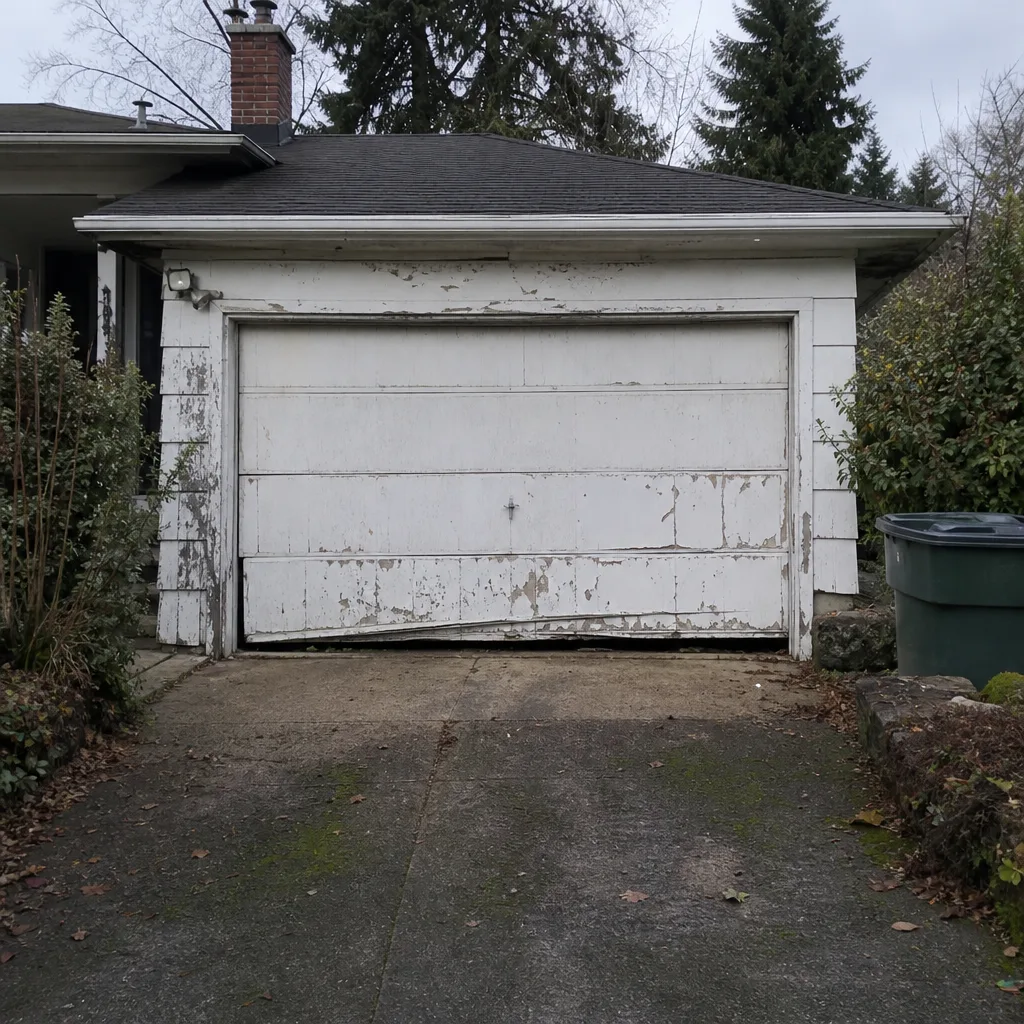 Before
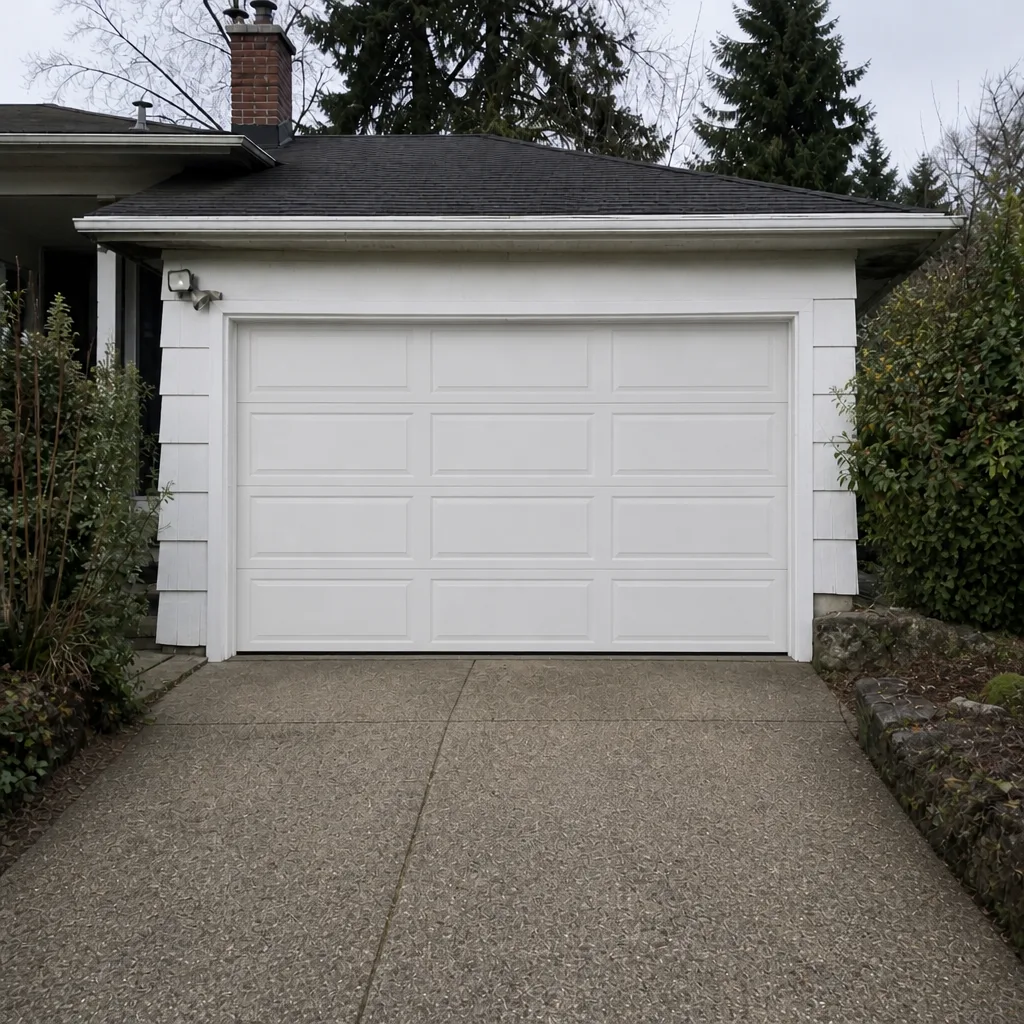 After
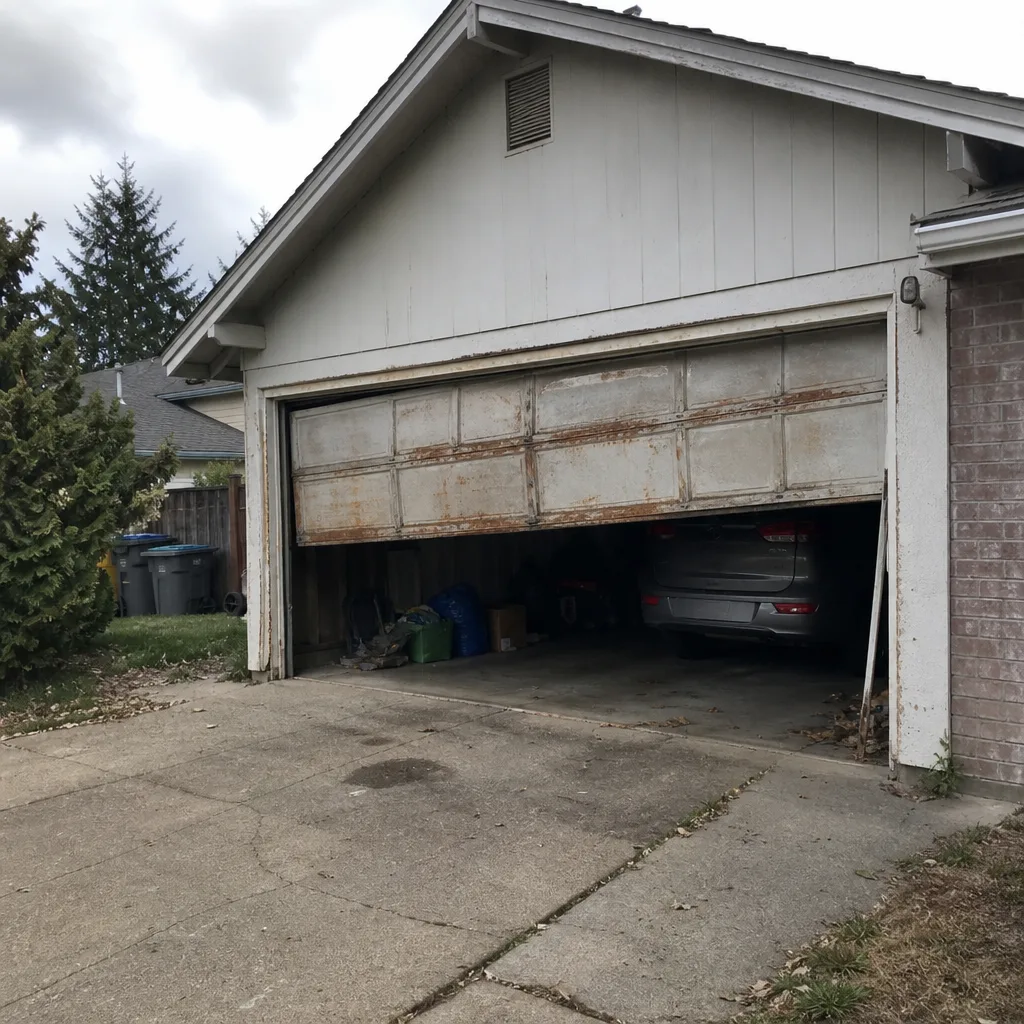 Before
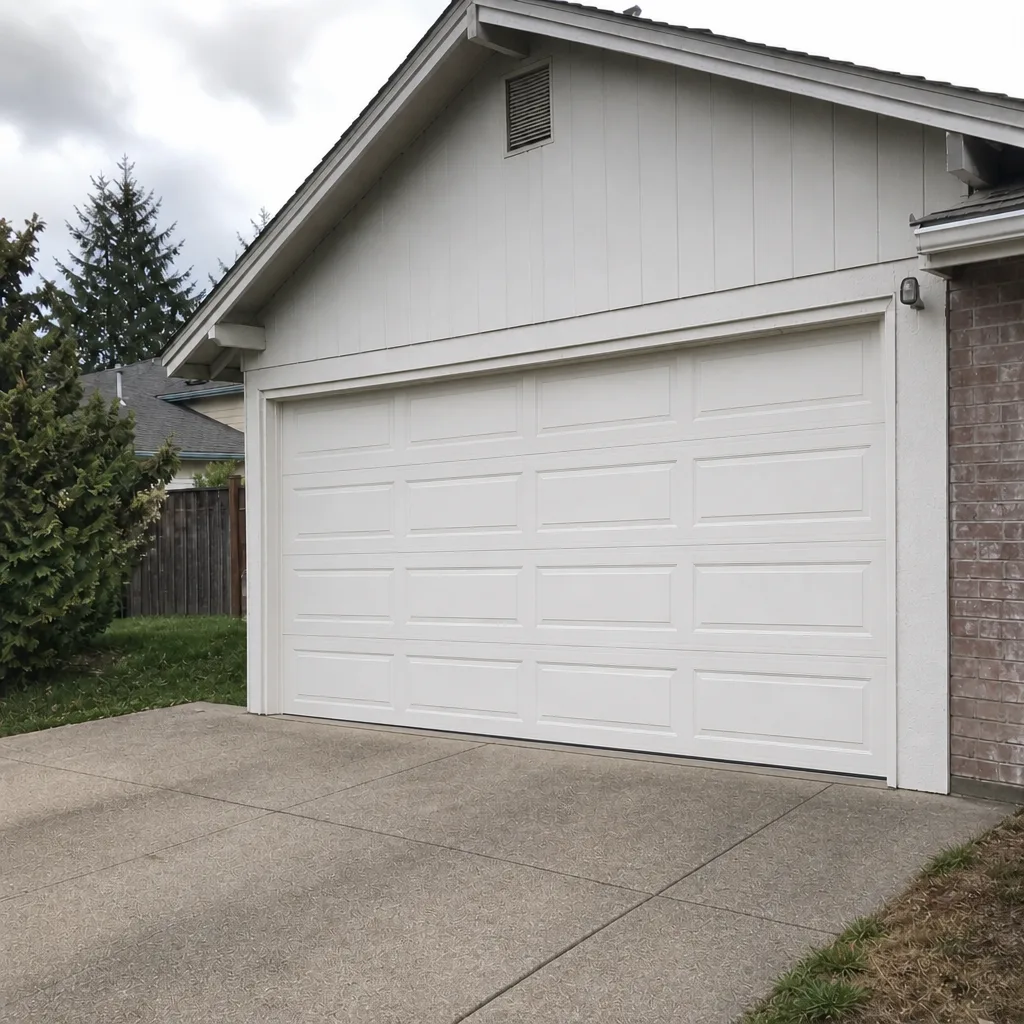 After
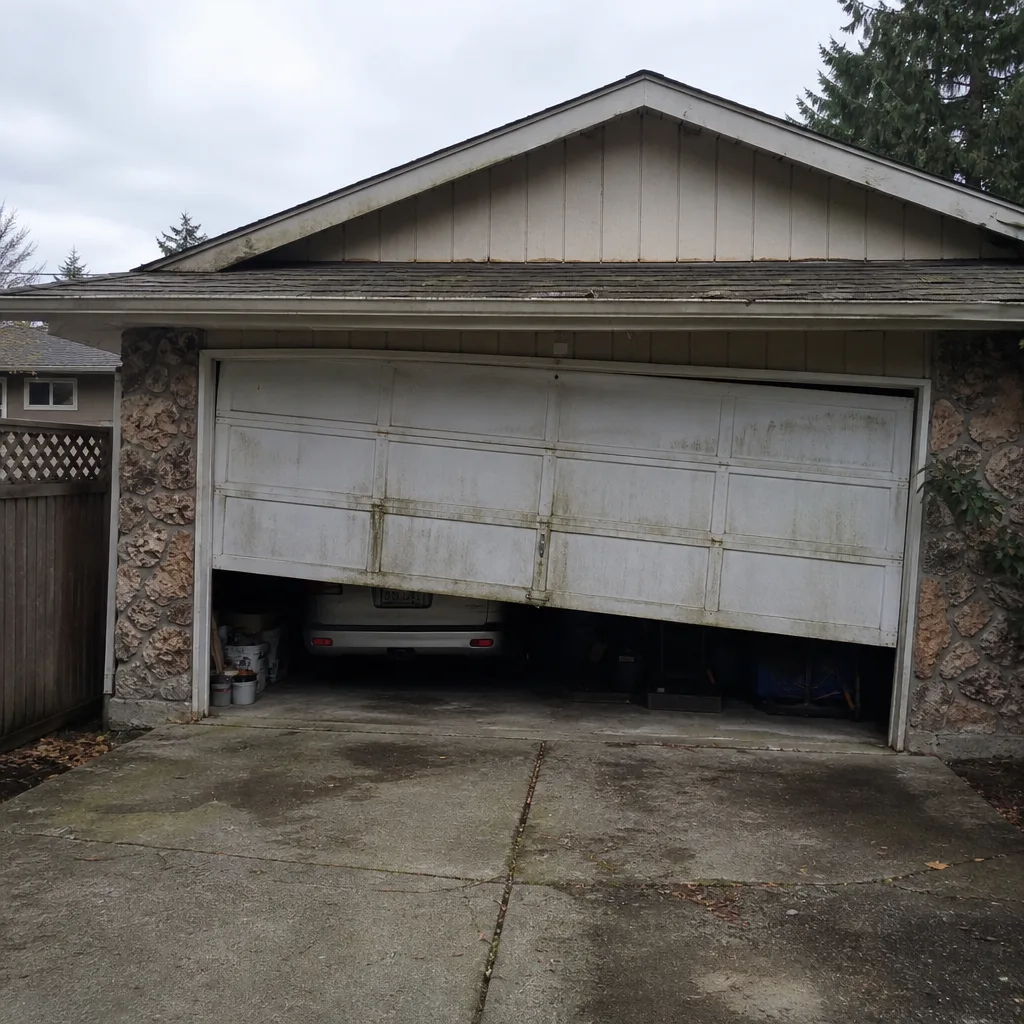 Before
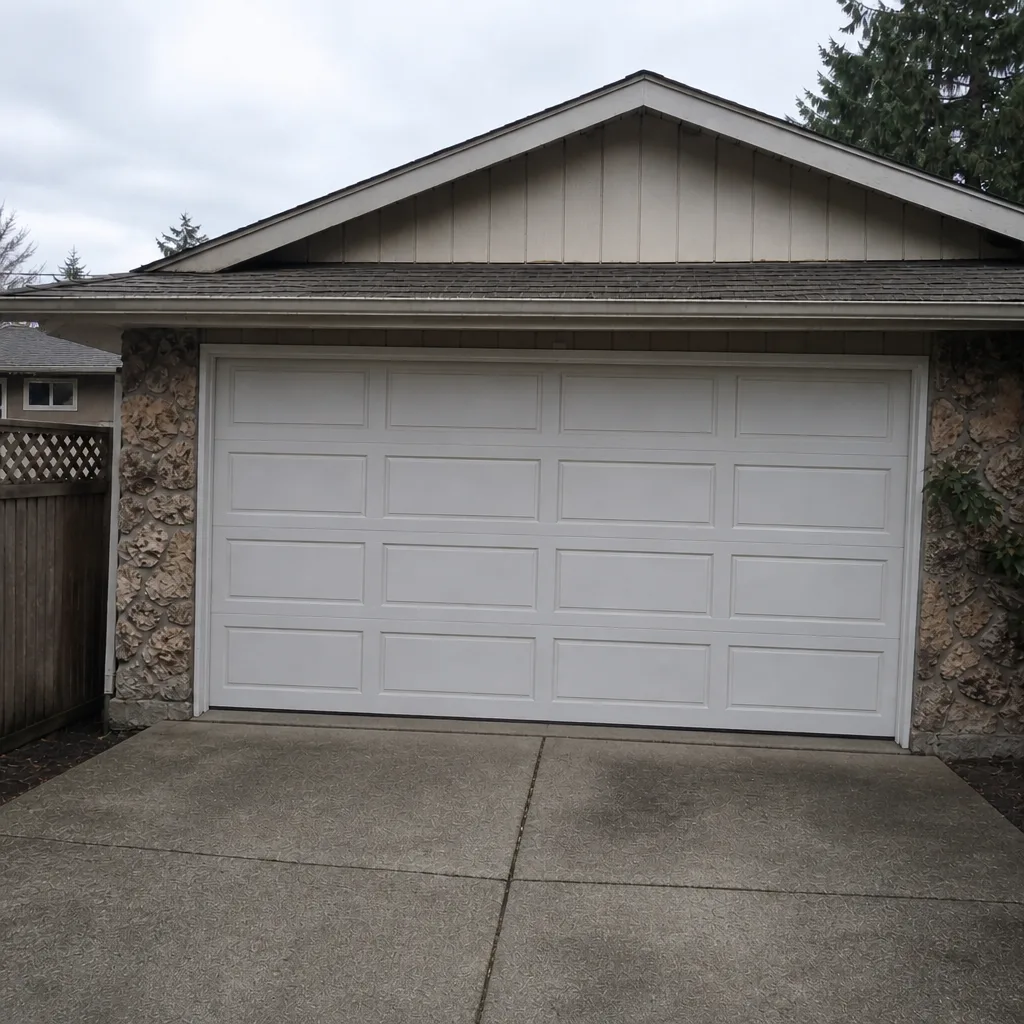 After
When to Call a Professional
Some problems are safe to look at yourself; others absolutely are not. Call a specialist if a spring has snapped, if the door is binding or off its tracks, if the opener strains or stops partway, or if the door won’t close fully and leaves the house unsecured. On a torsion spring or cable, don’t touch it. Those parts are under extreme tension and cause serious injury when they fail or are handled wrong. A door that’s out of balance or that slams or reverses on its own is also a call-us-now situation, because it’s a safety issue. Edmonds Garage Door Repair Pros offers free estimates in Edmonds. Call (844) 651-9427 and the price is quoted and agreed before any work starts.
Frequently Asked Questions
Most garage door repairs in Edmonds fall in the range of a service call plus parts, and the written estimate sets the final price. Spring repair is typically the biggest single line item because it involves matched springs and careful tensioning. Call (844) 651-9427 for an exact quote, and estimates are free.
Spring repair in Edmonds typically costs $180 to $340 for a single spring, and a matched pair usually costs about twice that because the springs are replaced together. Our team recommends replacing the pair as a set. Call (844) 651-9427 for an exact quote, and estimates are free.
For a stuck or broken door, call us and we’ll do our best to get an emergency call to you quickly. Emergency garage door service is a standing part of what we do, not an upsell tier. Call (844) 651-9427 and we’ll let you know what’s possible.
No. The price is quoted and agreed before any work starts, so the written estimate is the number you pay. If we discover something that changes the scope, we’ll tell you before doing any extra work. Call (844) 651-9427 for a free estimate.
The local professional we connect you with is licensed and insured as the state requires, and our technicians have up to 8 years of experience. Call (844) 651-9427 with any questions before we schedule.
It depends on the scope and on Edmonds building department rules, so ask the city before you order. Repairs like springs and openers generally don’t need one; a full replacement might. Call (844) 651-9427 and we’ll help you understand what’s typical.
We work across eight of the most widely installed brands: LiftMaster, Chamberlain, Genie, Clopay, Amarr, Wayne Dalton, Craftsman, and Raynor. That means we can usually recognize your system on sight. Call (844) 651-9427 to describe what you have.
The Bottom Line
Garage doors in Edmonds need advice built for Edmonds, not for a hot inland suburb. That means heavier-gauge steel or a rot-resistant composite for our wet climate, an opener that can handle the sloped driveways common on local lots, a door style that fits the Craftsman and cedar homes around town, and a genuine conversation about permits before any replacement. When something breaks, the cheaper correct answer is almost always a repair, and the written estimate is the price you pay. If you’re not sure which path fits your door, call (844) 651-9427 for a free estimate from specialists who work on Edmonds garage doors every day.
Written by the team at Edmonds Garage Door Repair Pros.