Last updated November 23, 2026
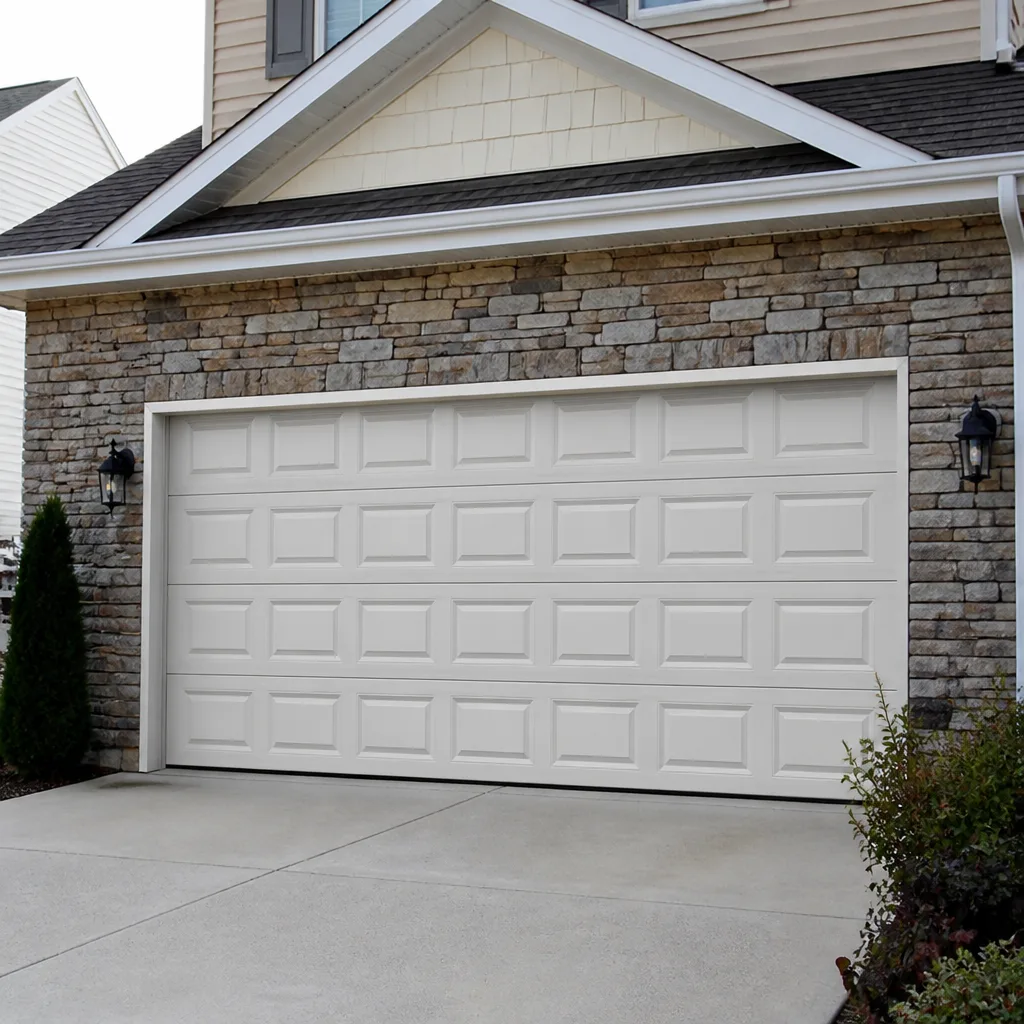 Raised-panel steel
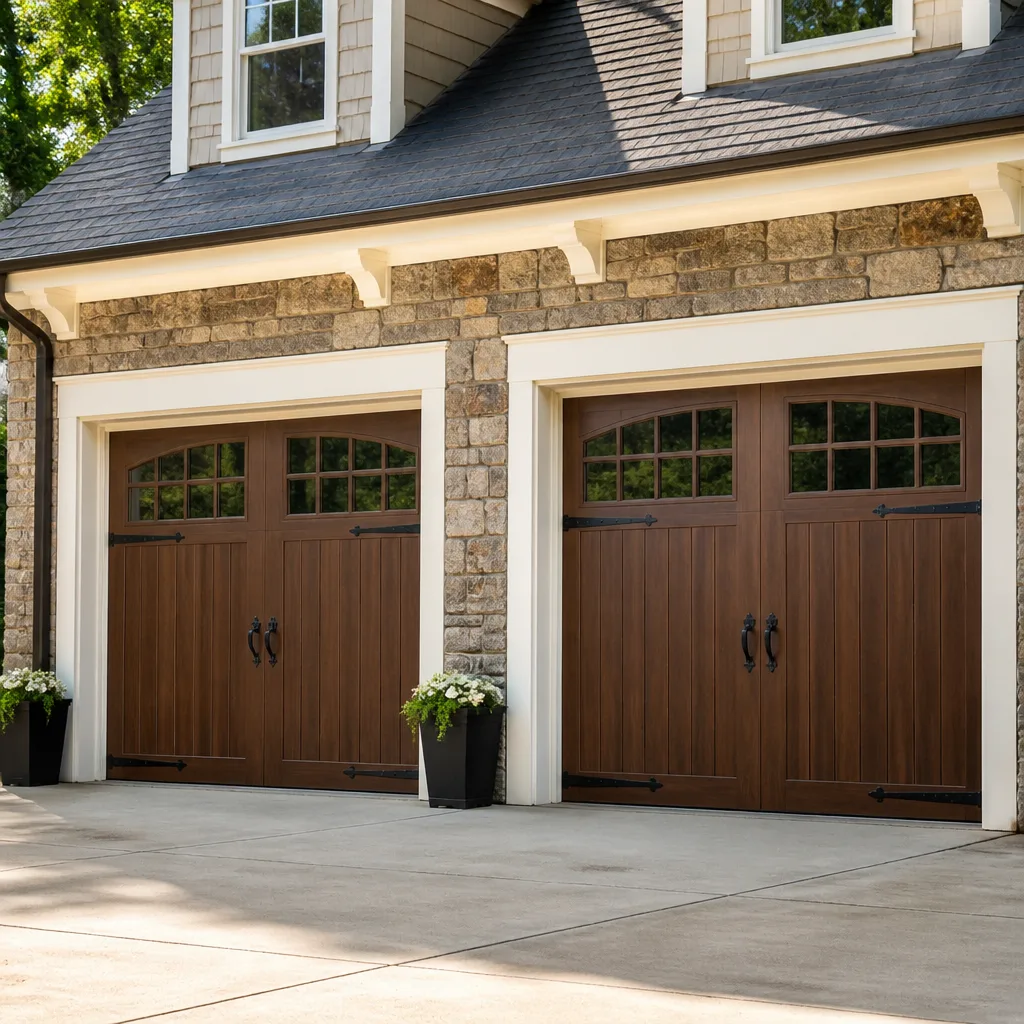 Carriage house
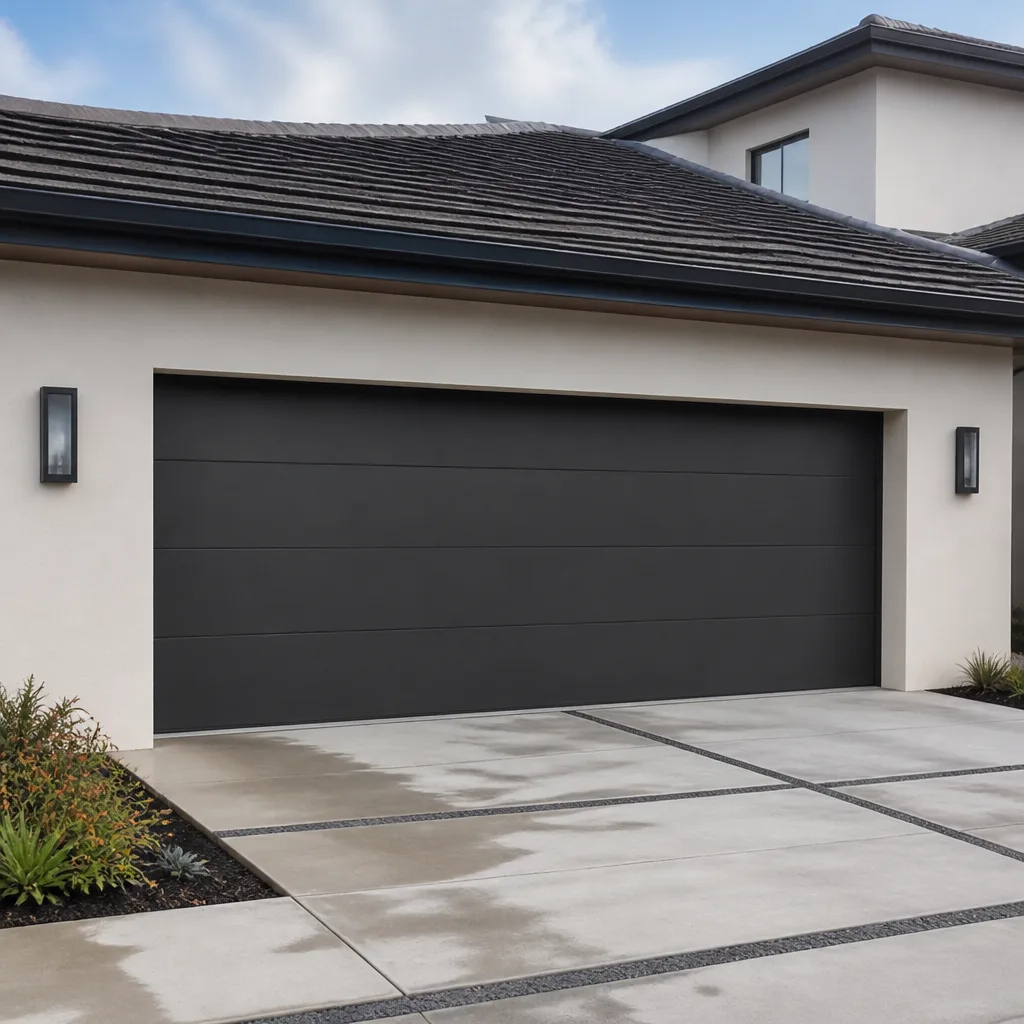 Modern flush
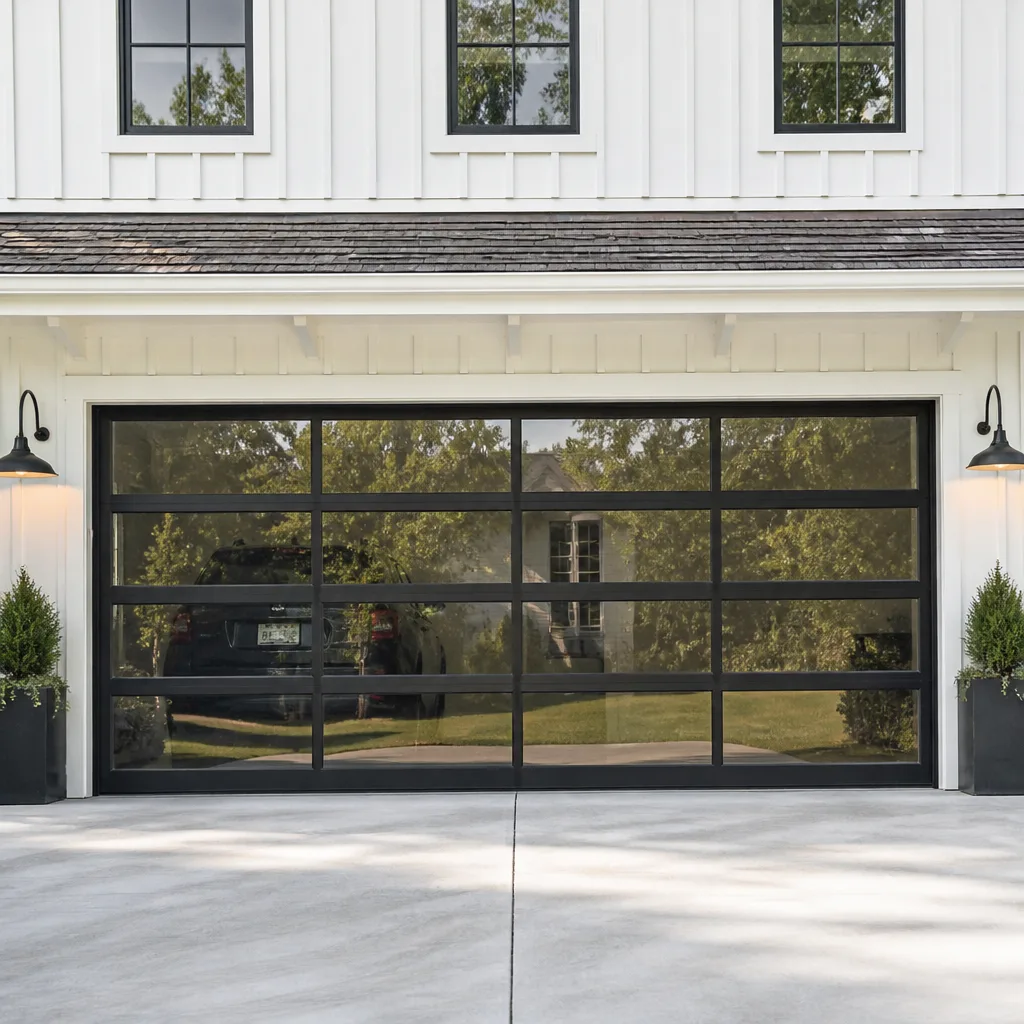 Full-view glass
 LiftMaster openers
 Chamberlain openers
Full 25-point door and opener safety check with every visit - springs, cables, rollers, tracks, and your LiftMaster or Chamberlain opener included
You get a price before we start. It does not change when the pro arrives.
Get your free estimateHow to Hire a Garage Door Contractor in Edmonds: A Step-by-Step Guide
Any licensed contractor can legally work on your garage door in Washington state. That’s the problem. The license doesn’t distinguish between someone who does garage doors daily and someone who does them twice a year between fencing jobs. Most homeowners in Edmonds hire on price and availability, then discover the gap when a “standard spring” fails in a month or an opener logic board gets swapped for the wrong model. This guide walks through what a Washington contractor license actually covers, the five interview questions that separate a true garage door specialist from a generalist with a toolbox, how to read a quote line by line, and why local parts inventory changes the timeline on a repair. By the end you’ll know exactly what to ask before you sign anything.
Quick Answer
To hire a garage door contractor in Edmonds, verify the contractor’s Washington state registration, then screen specifically for garage door specialization: ask about spring wind counts, brand-specific logic boards, and whether they stock parts locally or order from a distributor. A legitimate garage door specialist will answer these fluently and put brand names and part specifications in the written quote. If the answers are vague or the quote lists “standard spring” with no wire diameter, keep looking.
Styles & brands we work with
- Raised-panel steel
- Carriage house
- Modern flush
- Full-view glass
- LiftMaster openers
- Chamberlain openers
Table of Contents
- What Does a Washington State Contractor License Actually Cover?
- How Do You Tell a Garage Door Specialist From a Generalist?
- The Five Interview Questions That Expose a Generalist
- How to Read a Garage Door Quote Line by Line
- Why Local Parts Inventory Matters in Edmonds
- How to Verify Manufacturer Certification Before You Sign
- The Step-by-Step Hiring Process
- Common Mistakes to Avoid
- When to Call a Professional
- Frequently Asked Questions
What Does a Washington State Contractor License Actually Cover?
A Washington state contractor registration confirms a business is registered, bonded, and insured to operate as a contractor in the state. It does not confirm that the person showing up at your door has ever replaced a torsion spring, diagnosed a LiftMaster logic board, or installed a Clopay door on a sloped Edmonds driveway. The registration is a floor, not a ceiling.
Washington requires contractors to register with the Department of Labor & Industries and carry a bond and insurance. You can look up any contractor’s registration status through the L&I website before you hire. That’s step one, and it’s non-negotiable. But once you’ve confirmed the registration, you’ve only learned that the business is legally allowed to take your money and do work. You haven’t learned whether they’re competent at the specific trade of garage doors.
Here’s the gap in plain terms. A registered general contractor can legally accept a garage door spring replacement job. Nothing in the registration process tests for trade-specific knowledge. There’s no garage door endorsement, no specialty exam, no separate classification that says “this person knows torsion springs from extension springs.” The state leaves that distinction to you.
What the license does tell you
- The business is registered with the state and can legally contract for work.
- There’s a bond and insurance on file, which gives you recourse if something goes wrong.
- The business has a verifiable registration number you can check in minutes.
What the license does not tell you
- Whether the contractor specializes in garage doors or treats them as one service among many.
- Whether they carry brand-specific parts for your opener or door.
- Whether they’ve handled the spring system that’s actually on your door.
- Whether they know the difference between a 0.207 and 0.218 wire gauge spring.
In our experience, the license check is the easy part. The harder question is whether the contractor in front of you does garage doors as their core work or as a sidelight. That’s what the rest of this guide is about. If you’re already past the hiring question and just need the work done, our garage door repair page covers what a typical repair visit looks like.
How Do You Tell a Garage Door Specialist From a Generalist?
A garage door specialist does garage doors and nothing else. That single-trade focus shows up in the questions they ask, the parts they carry, and the language they use when they talk about your door. A generalist handles garage doors alongside fencing, decks, gutters, and small remodels, and the difference becomes obvious within about five minutes of conversation.
Edmonds has a housing stock that ranges from mid-century ramblers near downtown to newer construction up toward Perrinville and the Five Corners area. Doors on those homes span decades of manufacturing: older wood doors, mid-era steel doors, and newer insulated doors from Clopay, Amarr, and Wayne Dalton. A specialist recognizes the era and the brand on sight and knows which parts are still available. A generalist has to look it up, and often guesses wrong.
Here’s how to tell the difference in practice:
- Specialists ask about the door before they ask about the budget. They want to know the brand, the door weight, the spring type, and whether the opener is a belt, chain, or screw drive.
- Specialists name parts by specification. They’ll say “you’ve got a pair of torsion springs, looks like a 2-inch inside diameter” rather than “you need a new spring.”
- Specialists know brand quirks. LiftMaster and Chamberlain logic boards are related but not identical. Genie and Craftsman openers have their own parts ecosystems. A specialist doesn’t have to look up whether a Raynor door uses a specific hinge pattern.
- Specialists decline out-of-scope work. If you ask a garage door specialist to look at your fence while they’re there, the answer is no. That’s a good sign, not a bad one.
- Generalists quote in round numbers. A vague “spring replacement, $400” without a brand or specification is a red flag. Specialists quote line items.
When a door fails and you need emergency service, the specialization question gets sharper because the consequences are immediate: a door stuck open leaves the house unsecured, and a door stuck closed traps the car. We handle garage door opener repair as a standing offering precisely because opener failures are one of the most common urgent calls, and diagnosing them requires brand-specific knowledge that generalists rarely have.
The Five Interview Questions That Expose a Generalist
Ask these five questions before you hire. A true garage door specialist answers all five without hesitation and without needing to “check with the office.” A generalist stumbles on at least two. The questions are designed to test trade-specific knowledge that you can’t fake from a YouTube video.
- “What’s the wire diameter on the spring you’re quoting?” Torsion springs are specified by wire gauge (0.207, 0.218, 0.225, 0.234, 0.243, and so on), inside diameter, and length. If the answer is “standard,” that’s a generalist. A specialist will tell you the gauge and explain why it matters: a spring with the wrong wire gauge will fail early or put the wrong load on the door.
- “How many cycles is the spring rated for?” Spring life is measured in cycles, and a specialist knows the difference between a standard-cycle spring and a high-cycle spring. A vague “it’ll last a few years” answer tells you the person doesn’t think in these terms.
- “What’s the logic board part number for my opener brand?” You don’t need to know the answer, but the specialist should. LiftMaster, Chamberlain, Genie, Craftsman, and Raynor all use different logic boards, and a specialist who works across these brands knows the part families. A generalist will say “we’ll order the right one” without knowing which one.
- “Do you carry the spring on your truck today, or do you order it?” This is the inventory question, and it’s the one that most exposes a generalist. A specialist who handles spring repair routinely will confirm whether the specific spring for your door is on hand or needs to be ordered. If every answer is “we’ll get it from the distributor,” you’re looking at a multi-day wait.
- “Which manufacturers are you certified to work on?” A genuine specialist can name the brands they’re certified for without reaching for a brochure. If the answer is “all of them,” that’s a non-answer. Certification is specific and verifiable.
If you ask these five and get clean, specific answers, you’ve found someone worth quoting the job. If you get two or more vague responses, move on. The cost of a bad hire here is a premature spring failure or an opener that never quite works right, and neither is worth the savings.
How to Read a Garage Door Quote Line by Line
A legitimate garage door quote specifies the brand, the part, and the labor as separate line items. A quote that collapses everything into “garage door repair, $X” is either hiding something or the contractor doesn’t know what they’re replacing. Either way, you can’t evaluate the price without the line items, and you can’t hold anyone accountable to a vague scope.
Here’s what a specialist quote looks like compared to a generalist quote for the same job:
- Specialist: “Two torsion springs, 0.218 wire, 2-inch ID, matched pair, high-cycle rated – $X. Labor to replace both springs and rebalance door – $Y. Safety inspection of cables, rollers, and hinges included.”
- Generalist: “Spring replacement – $X. Parts and labor included.”
Those two quotes might come in at similar totals, but only one tells you what you’re actually getting. The specification is the difference between a spring rated for your door’s weight and a spring that happens to fit the tube.
Red flags in a garage door quote
- No brand specified. If the quote doesn’t name the brand of the spring, opener, or door, you have no way to compare it to anything.
- “Standard spring” with no wire diameter. Torsion springs are not standardized. “Standard” is a word that means the contractor doesn’t know the specification.
- Lump-sum pricing on a multi-part job. Spring replacement with a cable and roller inspection should be broken out, not rolled into one number.
- No written estimate before work starts. The price should be quoted and agreed before anyone touches the door. If a contractor wants to “take a look and get started,” walk away.
- Labor and parts merged without explanation. You should be able to see what the part costs and what the installation costs.
- No mention of a safety inspection. A spring replacement is the moment to check cables, drums, hinges, and rollers. A quote that skips the inspection is cutting a corner.
Ask for the written quote before any work begins, and read it in full. The written estimate sets the final price, and a specialist will hold to it unless you approve a change. If you’re comparing several quotes and one of them is dramatically lower, the specification is usually where the difference lives.
Why Local Parts Inventory Matters in Edmonds
When a spring breaks or an opener dies, the difference between a same-day repair and a multi-day wait usually comes down to one thing: whether the contractor has the part on hand or has to order it from a distributor. In the Edmonds area, that distributor is often south of here in Kent, and a special-order part can take a few business days to arrive. If the door is your primary entry or your car is trapped inside, a three-day wait is a real problem.
A garage door specialist who handles spring replacement as a routine specialty keeps common springs and opener parts on hand. That’s not a mark of a big operation; it’s a mark of specialization. If you do the same job every week, you stock the parts for it. If you do it once a quarter, you order each time.
This matters more in Edmonds than in some markets because the local housing stock produces a wide spread of door types and opener vintages. A specialist who works across garage door spring repair in this area sees the full range and knows which springs to keep in stock. A generalist sees a handful of doors a year and can’t justify the inventory.
What to ask about inventory
- “Do you have the spring for my door in stock, or do you need to order it?”
- “If you need to order, how long does it usually take?”
- “If my opener logic board fails, do you carry the part for my brand, or do you order it?”
- “Can you do the repair the same day if the part is available?”
If the answer to every question is “we’ll order it,” you’re looking at a contractor who treats garage doors as a side service. That’s the generalist signal, and it’s worth taking seriously when your car is stuck behind a broken door.
How to Verify Manufacturer Certification Before You Sign
Garage door manufacturers run certification programs for the contractors who install and service their products. Certification isn’t the same as a state license; it’s a trade-specific credential that confirms the contractor has been trained on that brand’s equipment. When you’re hiring for a brand-specific repair, this is the credential that actually matters.
The brands most commonly installed in Edmonds homes include LiftMaster, Chamberlain, Genie, Clopay, Amarr, Wayne Dalton, Craftsman, and Raynor. Each has its own parts ecosystem, its own logic-board families, and its own quirks. A contractor certified across these brands knows the differences. One certified for a single brand may not.
Here’s how to verify certification without taking anyone’s word for it:
- Ask which brands the contractor is certified to service. A genuine answer names specific brands. A vague “all the major brands” is not a certification claim.
- Ask for the certification to be named. Manufacturer programs have specific names. If the contractor can’t produce the name, they may not hold the credential.
- Check the manufacturer’s contractor locator. Most major manufacturers publish a dealer or contractor locator on their website. Look the contractor up directly.
- Match the certification to your equipment. If your door is a Clopay and your opener is a LiftMaster, you need a contractor certified on both, not just one.
- Ask what the certification covers. Installation-only certification doesn’t help you when the door is broken. Service certification is what matters for repair.
At Edmonds Garage Door Repair Pros, our technicians are certified to work on eight of the most widely installed garage door and opener brands in the country, and our technicians have up to 8 years of experience. That’s the credential that matters when the work is brand-specific. Whether you have a LiftMaster opener or a Clopay door, the certification is what tells you the person knows the quirks of your exact system, not just garage doors in general.
The Step-by-Step Hiring Process
Here’s the full process from first call to signed work order. Follow it in order, and you’ll screen out the generalists before they waste your time.
- Verify state registration. Look up the contractor’s registration through the Washington Department of Labor & Industries before anything else. Confirm the bond and insurance are current.
- Confirm garage-door-only focus. Ask what services the company provides. If the list includes fencing, decks, plumbing, or general handyman work, the garage door work is a side service. Move on.
- Ask the five interview questions. Wire diameter, cycle rating, logic board part number, inventory, and certification. A specialist answers all five cleanly.
- Request a written quote with line items. The quote should specify brand, part, and labor separately. If it doesn’t, ask for a revised quote before you schedule.
- Verify manufacturer certification. Match the certification to your specific door and opener brands. Check the manufacturer’s contractor locator if you want independent confirmation.
- Confirm the price before work starts. The written estimate sets the final price. No work begins until you’ve agreed to it in writing.
- Ask about the safety inspection. A spring replacement is the moment to check cables, drums, hinges, and rollers. Confirm the inspection is included before you sign.
- Keep the written quote on file. If anything changes during the job, the change should be approved by you in writing before the work continues.
If you’re starting from scratch, the simplest entry point is calling Edmonds Garage Door Repair Pros and asking the five questions directly. If the call goes well, you’ll have a written quote in hand and a clear scope. If you want to understand the repair process before you call, our spring repair page walks through what a typical job involves.
What “same-day” actually means on a repair
Same-day garage door service is a real offering, but it’s tied to parts availability and the nature of the repair. A spring replacement with the part on hand can often be done the same day. An opener logic board that has to be ordered from a distributor can’t. When you’re comparing contractors, ask specifically what they can do the same day and what they can’t. A specialist will tell you honestly. A generalist will promise everything and then miss the timeline.
What “scheduled” means on an installation
New door installation and full replacement are measured, ordered, and scheduled jobs. The door has to be measured on site, ordered from the manufacturer, and installed after delivery. That’s a multi-week timeline on most brands, and it’s not a same-day service. If a contractor promises same-day installation, they’re either using a stock door in a limited size or they’re not being straight with you about the timeline.
Common Mistakes to Avoid
- Hiring on price alone. The lowest quote is often the one with the least specification. Two quotes that look different by a hundred dollars are usually different by the spring grade or the brand of the part. Compare the line items, not the totals.
- Hiring a multi-trade handyman for a spring job. Spring replacement is the most mechanically dangerous job in the trade. A generalist who does a few a year doesn’t have the routine. Spring repair is a specialty, and the specialist treats it as routine.
- Accepting “standard spring” on a quote. Torsion springs are specified by wire gauge, inside diameter, and length. “Standard” is not a specification. Ask for the numbers or ask for a revised quote.
- Not asking about parts inventory in Edmonds. A part that has to be ordered from Kent can add days to a repair. If the door is your primary entry, ask what’s on hand before you schedule.
- Skipping the safety inspection. A spring replacement is the moment to check cables, drums, hinges, and rollers. A quote that skips the inspection is cutting a corner that matters. The cables are under the same tension as the spring, and a worn cable fails the same way.
- Taking the “we’ll check it when we get there” pricing model. A quote should be a quote. If the contractor won’t put a number in writing before the visit, you’ve lost the ability to compare and you’ve lost the ability to hold them to a price.
- Assuming a state license means garage door competency. It doesn’t. The license confirms the business is registered and bonded. It says nothing about whether the person knows a torsion spring from an extension spring. That’s what the interview questions are for.
See the difference
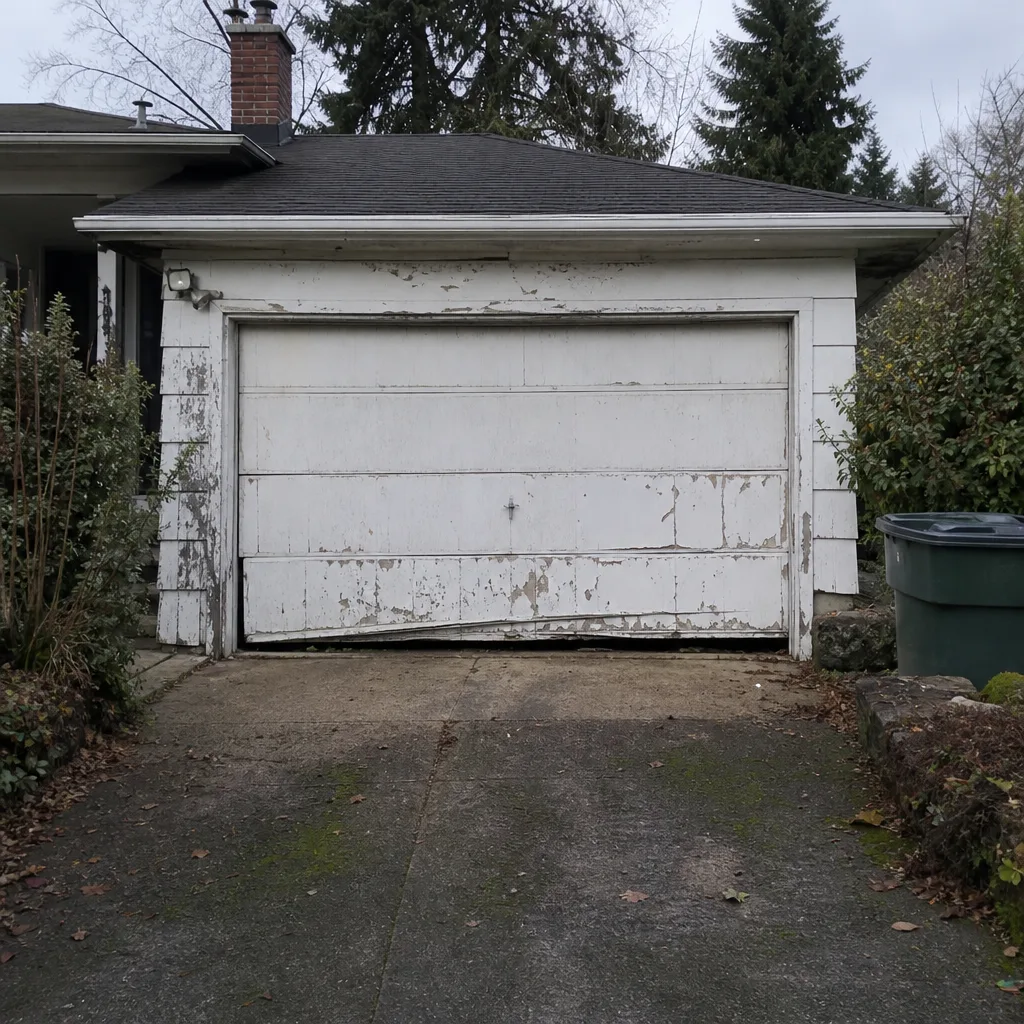 Before
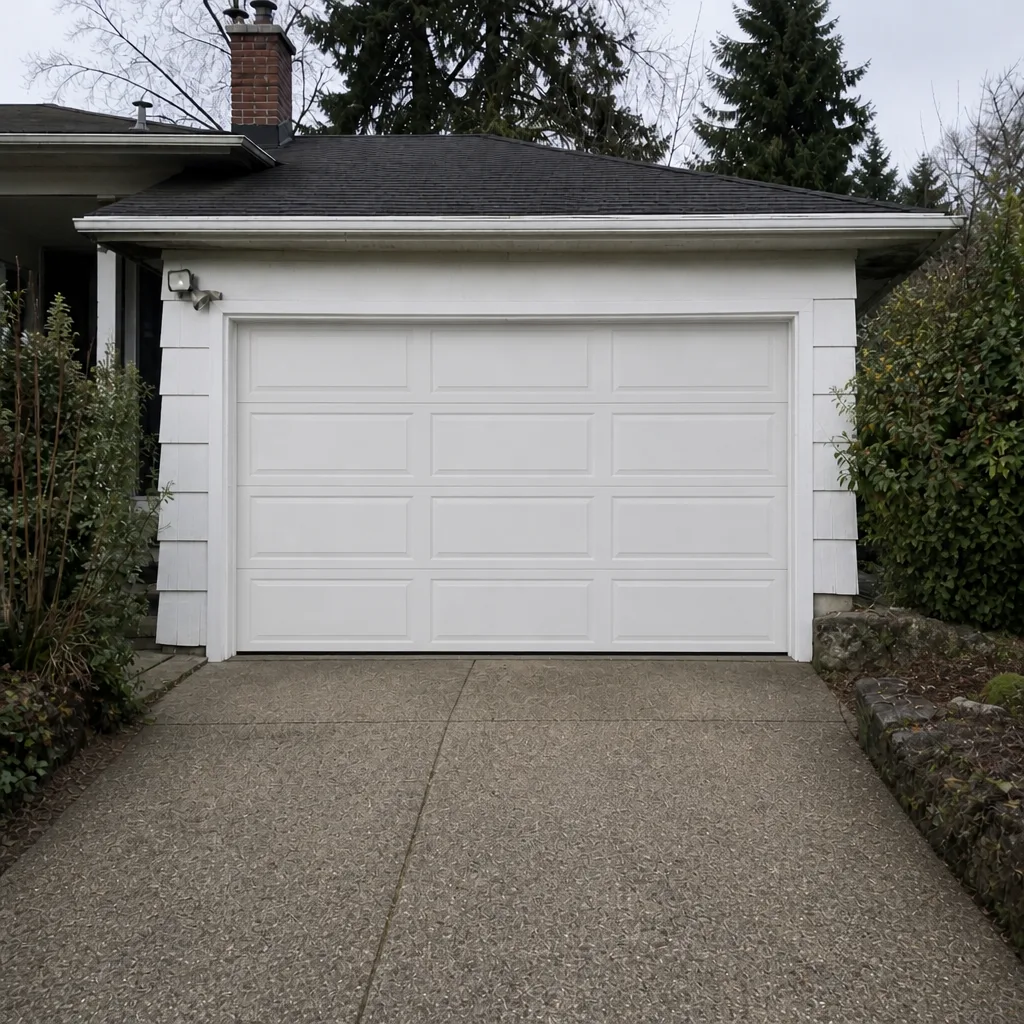 After
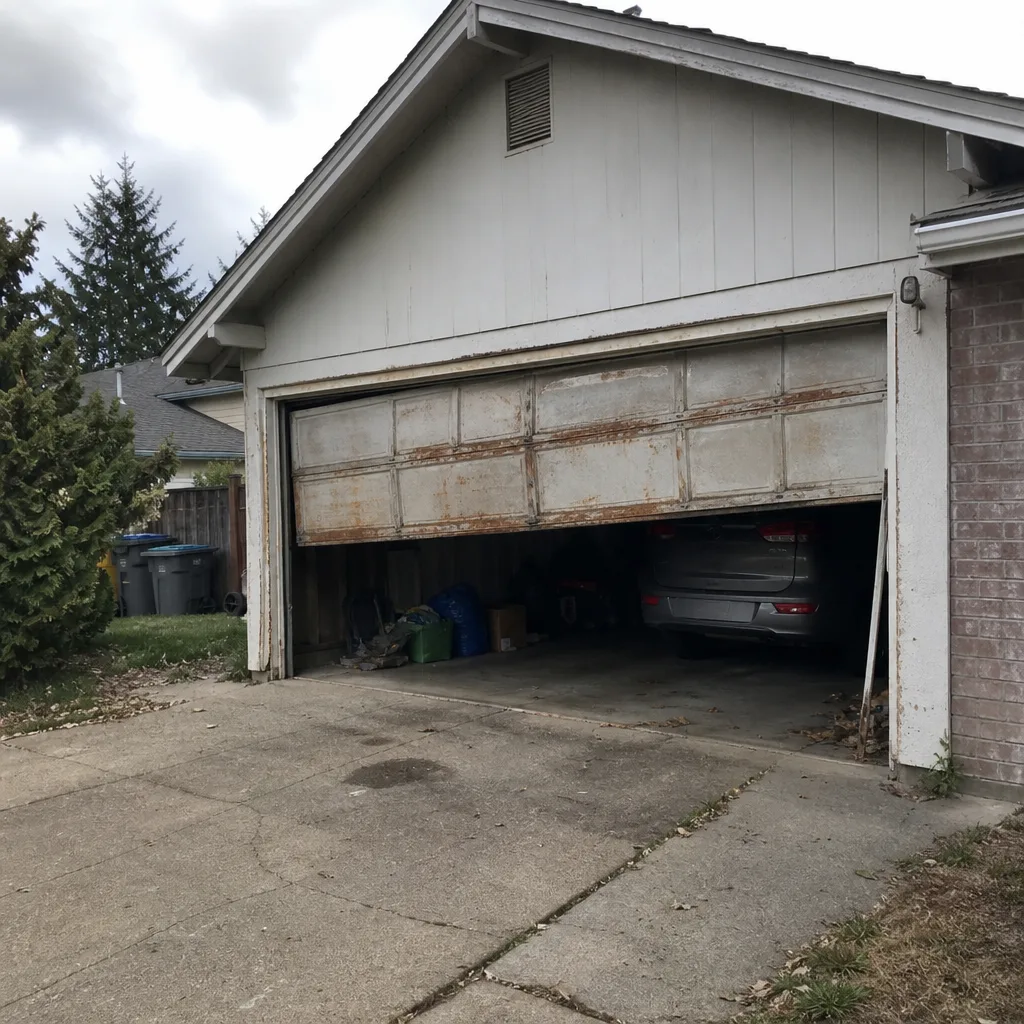 Before
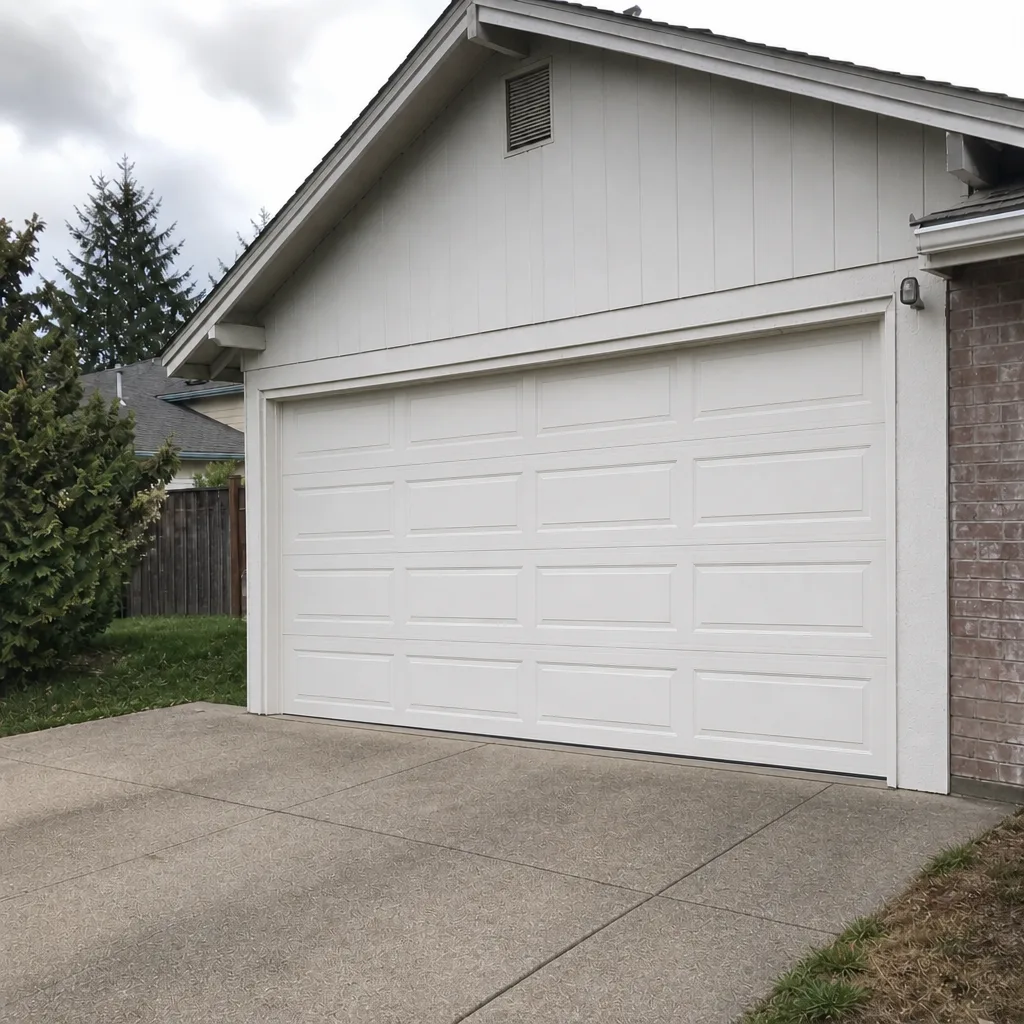 After
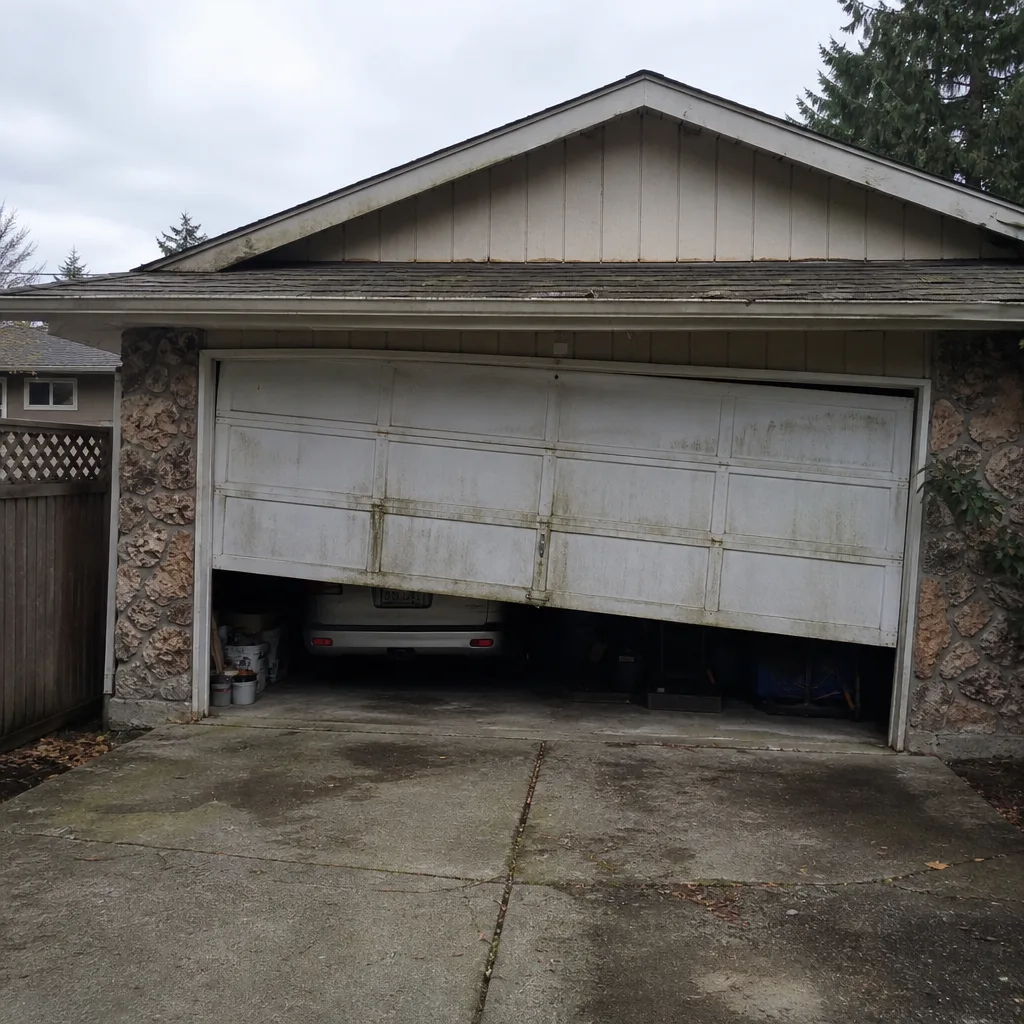 Before
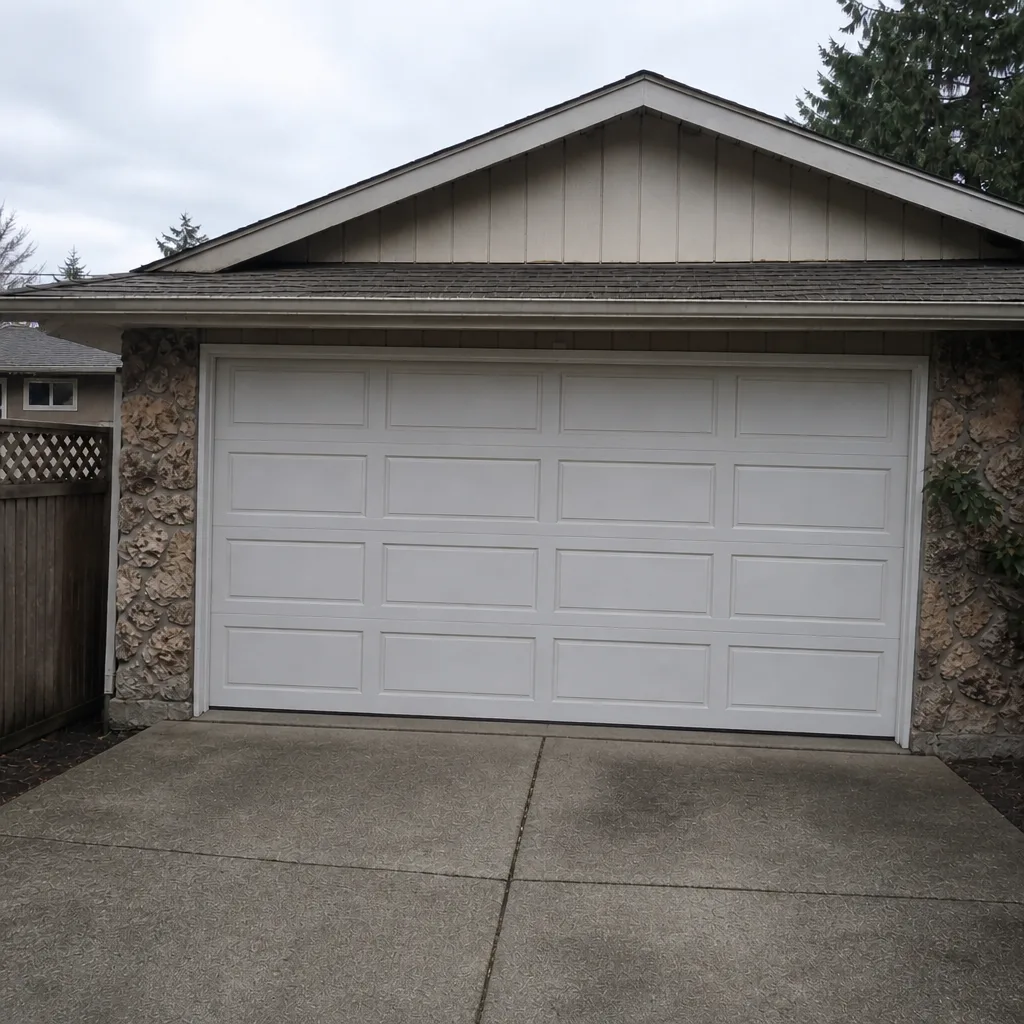 After
When to Call a Professional
Some garage door problems are safe to diagnose yourself: a door that reverses before it closes, a remote that needs new batteries, an opener that beeps but doesn’t move. Others are genuinely dangerous, and spring work is at the top of that list. Torsion springs and the cables they tension store enough energy to cause serious injury, and a spring that fails while you’re working on it is a real hazard. That’s not a job for a homeowner, and it’s not a job for a generalist who does garage doors twice a year.
Call a professional when the spring is broken, the door is off its tracks, a cable is frayed or snapped, the opener is dead and you can’t diagnose why, or the door has become visibly unbalanced. Call immediately if the door is stuck open and the house is unsecured, or stuck closed and the car is trapped. Emergency garage door service exists for those situations.
Edmonds Garage Door Repair Pros offers free estimates in Edmonds. Call (844) 651-9427 and we’ll walk through the five questions with you, confirm the brand and the part, and put a written quote in front of you before any work begins.
Frequently Asked Questions
Ask the five interview questions: wire diameter on the quoted spring, cycle rating, logic board part number for your opener brand, whether the part is in stock locally, and which manufacturers they’re certified for. A specialist answers all five cleanly. A generalist stumbles on at least two. The certification question is the fastest filter; a genuine specialist can name the brands without reaching for a brochure. Call (844) 651-9427 for a free estimate and we’ll walk through the answers with you.
No. A Washington state contractor registration confirms the business is registered, bonded, and insured to operate as a contractor. It does not test for garage door competency, and there’s no garage door specialty endorsement in the state registration system. A registered general contractor can legally accept a garage door spring job without ever having done one. The license is a floor; the interview questions and the certification check are what establish trade-specific competency.
It’s the difference between a same-day repair and a wait of several business days for a distributor order. Common springs and opener parts that a specialist keeps on hand can be installed the day of the call. A part that has to be ordered from a distributor south of here adds days to the timeline. If the door is your primary entry or your car is trapped inside, that wait is a real problem. Ask before you schedule: “Do you have the part, or do you need to order it?”
A proper quote specifies the brand, the part, and the labor as separate line items. For a spring replacement, that means the wire gauge, inside diameter, and length of the spring, plus a matched-pair notation if both springs are being replaced. For an opener repair, it means the logic board part family and the model. The quote should include a safety inspection of cables, drums, hinges, and rollers, and the written estimate should set the final price before any work begins. If the quote says “standard spring” with no specification, ask for a revised quote.
Yes, for repairs where the part is on hand. A spring replacement or an opener repair with the part available can often be done the same day. A repair that requires an ordered part can’t be same-day, and no honest contractor will promise it can. Installation and full replacement are always scheduled, never same-day, because the door has to be measured on site and ordered from the manufacturer. Ask specifically what’s available the same day when you call. Estimates are free at (844) 651-9427.
The most commonly installed brands in Edmonds homes are LiftMaster, Chamberlain, Genie, Clopay, Amarr, Wayne Dalton, Craftsman, and Raynor. A specialist certified across these brands knows the parts ecosystems, logic-board families, and installation quirks for each. If your door is a Clopay and your opener is a LiftMaster, you need a contractor certified on both. Ask which brands the contractor is certified for, then verify through the manufacturer’s contractor locator. A vague “all the major brands” answer is not a certification.
It shouldn’t. The written quote sets the price before any work begins, and a change should only happen if you approve it in writing. A reputable specialist quotes after the door is measured and the part is identified, so there’s no surprise inspection day. If a contractor wants to “take a look and get started” before giving you a number, that’s the pattern to walk away from. Get the quote in writing before anyone touches the door.
The Bottom Line
Hiring a garage door contractor in Edmonds is a specialization test, not a price test. Verify the Washington state registration, then go past it: ask the five interview questions, read the quote line by line, confirm the brand certification, and ask what’s in stock locally. A true specialist answers cleanly, puts the specification in writing, and holds the price they quoted. A generalist stumbles on the wire diameter, quotes “standard spring,” and orders the part from a distributor. The difference shows up in the first five minutes of the call, and it’s the reason a garage door job is worth hiring for specialty.
If you’re ready to put this guide to work, call Edmonds Garage Door Repair Pros at (844) 651-9427 for a free estimate. Whether it’s a stuck door, a broken spring, an opener that won’t respond, or a full installation, we’ll confirm the brand, walk through the parts, and put a written quote in front of you before any work begins. Emergency service is a standing offering, not an upcharge tier, and we handle the job from the first call through the final safety check.
Written by the team at Edmonds Garage Door Repair Pros.